
When Did 73 Tabs Become Normal?
You open your browser. The tab bar is a solid line of favicons so small you can’t read the titles. You know one of them has that article you needed, but which one? You start clicking through tabs like playing whack-a-mole, hoping to recognize the right one before you lose your train of thought. This is not productivity. This is digital hoarding with consequences.
Here’s what actually happens when you have too many tabs: your computer slows down because each tab eats memory. Your focus fractures because visual clutter creates mental clutter. You lose important pages because they get buried under 40 tabs of “I’ll read this later” articles you never read. And worst of all, you know this is a problem but solving it manually feels impossible. AI tab manager tools exist because closing tabs one by one isn’t scalable when they multiply faster than you can manage them.
The real issue isn’t that you open too many tabs. It’s that browsers weren’t designed for how we actually work. We research. We context-switch between projects. We find something interesting and think “I’ll need this later” without a system to organize it. Traditional tab management is like trying to organize a library by throwing books in a pile and hoping you remember where everything is.
Why Your Brain Can’t Handle Tab Chaos
The Visual Clutter Tax
Every open tab is a micro-decision your brain hasn’t made yet: “Do I still need this? Should I read it? Is it important?” Those unmade decisions stack up. By tab 30, your brain is carrying the weight of 30 unresolved choices. That’s exhausting before you’ve done any actual work.
Studies on visual distraction show that clutter reduces your ability to focus by creating competing stimuli. Each tab title is screaming “look at me!” even when you’re trying to focus on one task. Your attention gets fragmented across all those open possibilities.
The “I Might Need This” Trap
You keep tabs open because closing them feels like losing information. What if you need that article tomorrow? What if that page has a detail you’ll want to reference? So you leave it open. Multiply this by 50 tabs and you’ve built a prison of your own fear of missing out.
The ai tool to manage too many browser tabs approach solves this by separating “keeping information” from “keeping tabs open.” AI archives the content so you can close the tab without losing access. Your browser gets lighter. Your mind gets clearer. The information is still there when you need it.
How AI Understands Your Tab Chaos
Smart Grouping by Context
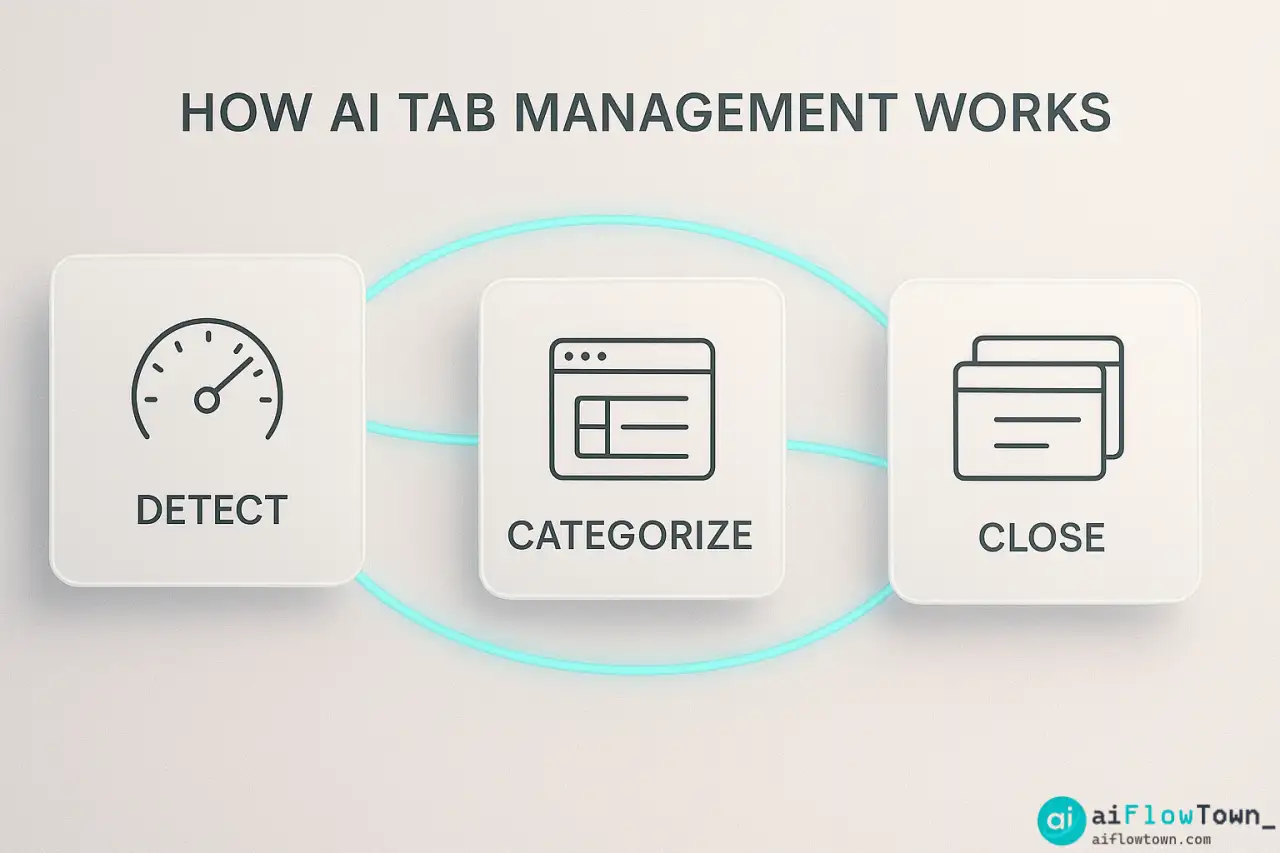
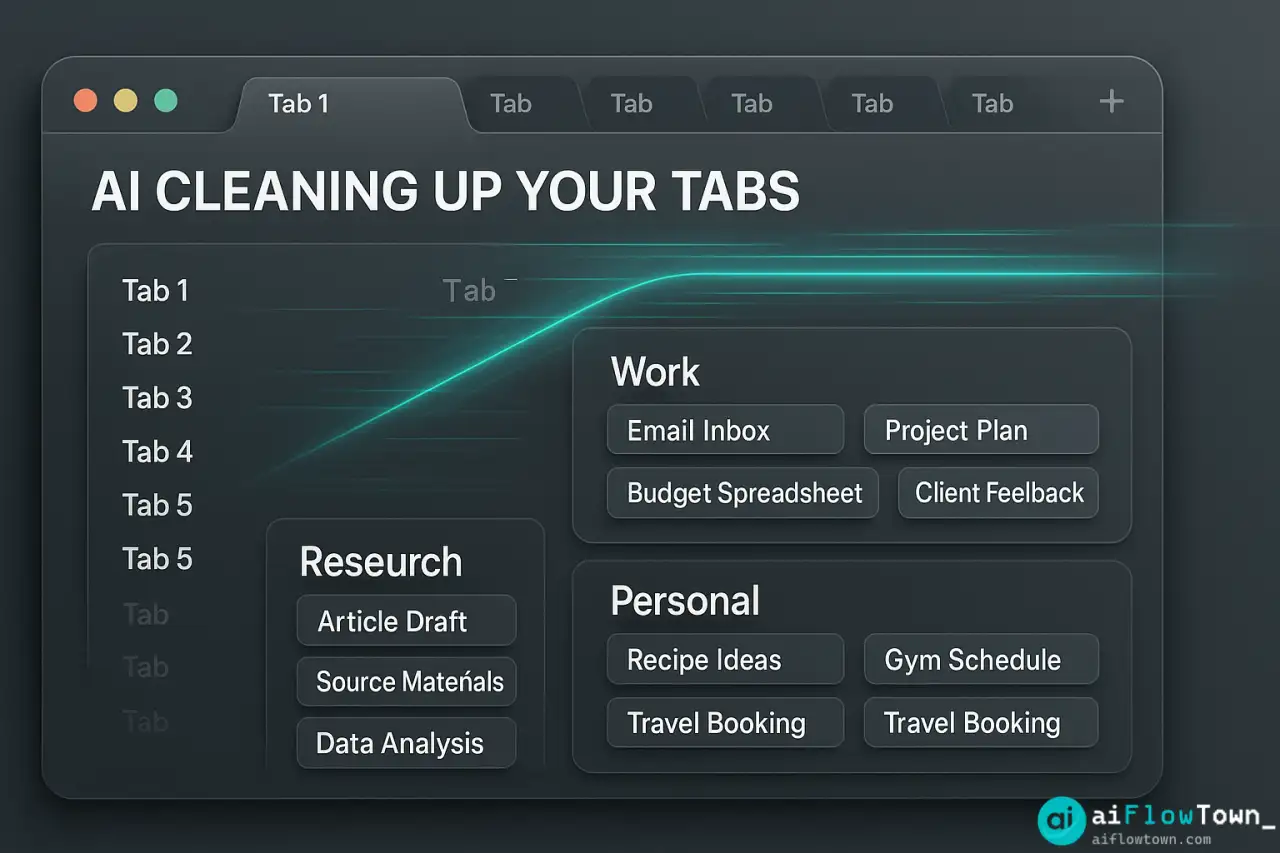
Modern AI tools read the content of your tabs, not just the URL or title. They understand that these five tabs are all about “Q4 marketing campaign research” even though they’re from different sites. Those eight tabs over there? All related to “learning Python.” Three tabs about vacation planning. Two tabs that are just Gmail and Calendar you keep open permanently.
The AI creates automatic groups based on topic clustering. When you’re working on the marketing campaign, it surfaces those tabs and hides the Python learning tabs. When you switch to coding, the groups swap. This is how auto organize browser tabs with ai actually works in practice—it matches your mental context switching with visual organization.
Priority Detection
Not all tabs are equal, but your browser treats them the same. AI doesn’t. It tracks which tabs you actually interact with versus which ones have been sitting untouched for two weeks. Frequently accessed tabs get priority placement. Zombie tabs—opened once, never revisited—get flagged for archiving.
Some AI tab managers even analyze urgency signals: tabs with “due date” or “deadline” in the content, tabs from your company’s project management tool, tabs you’ve visited multiple times today. These stay prominent. Background reading and “nice to have” research gets deprioritized.
Think of AI tab management like having a personal assistant who watches what you’re working on and quietly organizes your desk while you work—pulling relevant documents forward, filing away finished projects, and keeping your workspace clean without you asking.
Intelligent Summarization
Here’s where it gets powerful: AI can read your 50 open tabs and give you a text summary of what each one contains. Instead of clicking through tabs trying to remember “which one had that pricing info?”, you search your tab summaries. The AI tells you “Tab 23 contains pricing comparison for three SaaS tools.” You jump straight there.
This turns your messy tab bar into a searchable knowledge base. The information is organized even when the tabs aren’t. Learn more about AI workflow automation techniques that complement this approach.
Setting Up Your First AI Tab Manager
Choose Your Tool
Several ai extension for tab overload management options exist. Here are the main players:
| Tool | Best For | Key Feature | Price |
|---|---|---|---|
| Tab Wrangler + ChatGPT | DIY enthusiasts | Customizable rules | Free |
| Workona | Project-based workers | Workspace switching | Free / $6/mo |
| OneTab with AI | Simple consolidation | One-click tab saving | Free |
| Toby | Visual organizers | Drag-and-drop collections | Free / $9/mo |
| SigmaOS | Power users | Full AI workspace | $20/mo |
For this walkthrough, I’ll use Workona because it balances power with ease of use, and the free tier is genuinely useful.
Installation and First Launch
Install the extension from Chrome Web Store or Firefox Add-ons. On first launch, it asks about your work style:
- ❓ Do you work on multiple projects simultaneously?
- ❓ How many tabs do you typically have open? (Be honest)
- ❓ Do you want automatic grouping or manual control?
- ❓ Should idle tabs close automatically after X days?
Answer truthfully. AI learns your patterns faster when it knows your starting point. If you have 80 tabs open right now, don’t say you’re a minimalist. The tool needs accurate data to help.
The Initial Tab Audit
Once installed, the AI scans your current tabs. This takes about 30 seconds. It’s reading page content, analyzing relationships, and building an initial organization structure. You’ll see something like:
Detected patterns:
– 12 tabs related to “Client Project Alpha”
– 8 tabs about “Marketing research”
– 6 tabs for “Personal finance planning”
– 15 tabs with no clear connection (Miscellaneous)Suggested action: Create workspaces for each topic?
– AI Initial Analysis –
Say yes. Watch as your chaotic tab bar transforms into organized workspaces. You can switch between them with keyboard shortcuts. Working on Client Project Alpha? See only those 12 tabs. Need to check your finances? Switch workspace. The other tabs don’t disappear—they’re just hidden until you need them.
Configure Your Rules
Now set up automation. Tell the AI your preferences using smart tab grouping using ai tools:
Auto-close rules:
- Tabs inactive for 7 days → move to archive
- Tabs marked "read later" → save to reading list, close tab
- Duplicate tabs → keep only the most recent

Auto-group rules:
- Tabs from same domain in same session → suggest group
- Tabs with related content → cluster automatically
- Tabs with keywords like "urgent" or "review" → priority group

Notification rules:
- Alert if total tabs exceed 30
- Daily summary of archived tabs (in case you need to recover something)
- Weekly report of tab usage patterns
These rules run silently in the background. You don’t manage tabs anymore—the AI does. You just work.
The First Week Experience
- Day 1: Setup takes 10 minutes. Feels a bit weird to trust AI with your tabs.
- Day 2: You notice your browser is faster. You’re at 15 tabs instead of 60.
- Day 3: You search for a tab by keyword and find it instantly. Game changer.
- Day 4: A tab you forgot about gets auto-archived. You realize you didn’t need it.
- Day 5: You switch between project workspaces and your brain feels less scattered.
- Day 7: You check your stats: 87 tabs managed this week, 45 auto-archived, 0 needed recovery.
Advanced Features That Change How You Work
AI-Powered Tab Search
Instead of clicking through tabs, you search them with natural language. Type “that article about pricing strategy” and AI finds it—even if the tab title is something generic like “Blog Post | Company Name.” It reads the content, not just metadata.
This works even for archived tabs. You’re searching your entire browsing history with AI understanding context. It’s like having Google search built into your tab bar, but only searching pages you’ve actually visited. For more search capabilities, explore AI-powered productivity tools.
Smart Suggestions
“You open these 5 tabs together every Monday morning. Want to create a ‘Monday Routine’ workspace that opens them automatically?”
“These 8 research tabs have been open for 12 days but you only look at 2 of them. Archive the unused ones?”
You’re not managing rules. AI is learning your behavior and adapting. It becomes smarter the longer you use it.
Cross-Device Sync with Intelligence
You close your laptop with 20 tabs across 3 workspaces. Open your phone. The AI knows which tabs are mobile-friendly and which aren’t. It suggests: “You have 6 mobile-optimized tabs from your ‘Research’ workspace. Want to continue reading?”
On your tablet, different suggestion: “You have 3 tabs with video content from your ‘Learning’ workspace. Better viewing on larger screen.”
The sync is context-aware, not just dumb mirroring. This is how reduce browser tabs with ai automation works across your entire digital life.
Automatic Session Recovery
Browser crash? Extension update forces restart? AI remembers your exact workspace state: which tabs were in which groups, which workspace was active, which tabs were muted. One click restores everything exactly as it was.
Better yet: it’s smart about what to restore. Tabs you hadn’t touched in days don’t reload immediately—they’re “lazy loaded” only when you click them. Your browser opens fast even after a crash with 50 tabs.
| Feature | Without AI | With AI |
|---|---|---|
| Finding a specific tab | Click through 50+ tabs manually | Search by content, find instantly |
| Organizing tabs | Drag and drop, manual grouping | Automatic clustering by topic |
| Closing old tabs | Fear of losing info, never close | Auto-archive with smart recovery |
| Context switching | All tabs visible, all distracting | Workspace switching, focused view |
| Browser performance | Slow with 70+ tabs | Fast with intelligent suspension |
Real Results: A Designer’s Tab Transformation
The Before State
Alex’s typical browser state:
- 23 tabs: Current client project (design references, mockups, competitor sites)
- 5 tabs: Email, calendar, Slack, project management, invoicing tool (always open)
- 17 tabs: Design inspiration saved over weeks (“I’ll reference this later”)
- 8 tabs: Personal stuff—shopping, articles, random research
- ❓ 12 tabs: Honestly no idea what these are anymore
Total: 65 tabs. Browser takes 30 seconds to launch. Finding anything requires clicking through tabs randomly. Mental overhead of “I should organize this” weighs on every work session.
The Setup Process
Workspaces created:
1. "Current Client" - Active project work
2. "Inspiration Library" - Design references (archived, searchable)
3. "Business Admin" - Email, tools, always accessible
4. "Personal" - Non-work stuff, separate from work mode

Rules set:
- Auto-archive tabs inactive for 5 days
- Group tabs by domain for same-project work
- Pin business admin tools (always visible)
- Close personal tabs at end of workday
After 30 Days
- ✅ Average tabs open: 12-15 (down from 65)
- ✅ Browser launch time: Instant (down from 30 seconds)
- ✅ Time spent finding tabs: Nearly zero (AI search handles it)
- ✅ Design references: 147 archived and searchable (vs 17 cluttering the tab bar)
- ✅ Mental clarity: “It sounds cheesy, but not seeing 65 tabs makes me less anxious”
The best part? Alex didn’t change work habits. Still opens multiple tabs for research. Still saves inspiration. The difference is AI handles the cleanup automatically. The messy behavior is the same—the mess just doesn’t accumulate anymore.
The Unexpected Benefit
Alex discovered something surprising: with ai tab manager working in the background, creative blocks happened less often. Why? Because finding inspiration became instant instead of frustrating. Instead of thinking “I saw a great example last week but I don’t remember where,” Alex could search “minimal navigation design” and AI surfaced that archived tab immediately. The inspiration was still accessible—just not cluttering active workspace.
Creativity didn’t improve because of AI. It improved because friction decreased. Check out more insights on maintaining focus and creative flow.
Troubleshooting Common Tab Management Issues
AI tab managers work best when you trust them. The hardest part isn’t the technology—it’s overcoming the fear of closing tabs. Remember: archived doesn’t mean deleted. Everything is searchable and recoverable.
Issue: AI Groups Things Wrong
Sometimes AI misunderstands context and groups unrelated tabs together. This happens especially in the first week before it learns your patterns. Fix: manually regroup once, and AI learns the correction. Most tools have a “not related” button that teaches AI these tabs don’t belong together.
Issue: Important Tab Got Auto-Archived
You need a tab AI closed three days ago. Don’t panic. Open the archive, search for it, restore it. Then adjust your rules: “Never auto-close tabs from [specific domain]” or “Keep tabs with [keyword] open.” AI adjusts its behavior based on your corrections.
Issue: Too Many Notifications
AI is trying to help but pinging you constantly about tab suggestions. Overwhelming, not helpful. Solution: Dial back notification frequency in settings. Weekly summaries instead of daily. Only alert for truly idle tabs (14 days instead of 7 days). AI should be invisible background help, not a nagging assistant.
Issue: AI Isn’t Learning My Patterns
You’ve been using it for a month but it’s still making the same grouping mistakes. Possible causes: You’re overriding its suggestions without providing feedback. Click “why did you group these?” and tell the AI why it’s wrong. Or: Your work is genuinely random and doesn’t have patterns. In that case, use manual workspaces instead of relying on auto-grouping.
Beyond Tab Management: Building a Smarter Browser Workflow
Reading List with AI Summarization
Instead of keeping “read later” tabs open, send them to an AI reading list. The AI reads each article and gives you a 3-sentence summary. You scan summaries and decide what’s actually worth your time. Articles you don’t need? Deleted without guilt because you got the key info from the summary.
Research Session Recording
Enable “research mode” and AI tracks every page you visit during a research session. At the end, it generates a summary: “During this 90-minute session, you visited 23 pages about [topic]. Key findings: [bullet points]. Most relevant sources: [links].” You get the insights without manually organizing bookmarks.
Collaborative Workspaces
Share a workspace with team members. Everyone sees the same set of tabs, but AI personalizes what each person sees based on their role. Developers see the tech docs. Designers see the mockups. Project manager sees the overview. Same workspace, different intelligent views.
❓ FAQ
What happens to tabs AI closes? Are they gone forever?
No. Archived tabs are searchable and recoverable indefinitely. AI stores the URL, page content snapshot, and your activity data. You can restore any tab with one click, even months later.
Is AI reading my sensitive tabs a privacy risk?
Reputable AI tab managers process data locally or use encrypted cloud storage. Check the tool’s privacy policy. For sensitive work, use tools that offer local-only processing or exclude specific domains from AI analysis.
⚡ Will this slow down my browser?
The opposite. AI extensions add minimal overhead, but they reduce total tabs by 60-80%. Net result: your browser runs faster because you’re not keeping 70 tabs in memory simultaneously.
Does this work on mobile browsers?
Some tools do, but mobile browsers have limited extension support. Best approach: use AI tab management on desktop, and sync intelligent collections to mobile for reading. Most tools offer mobile apps that show your organized workspaces.
How long before AI learns my patterns?
Most tools show improvement within 3-5 days of use. By week two, grouping accuracy is usually 80%+. By week four, the AI understands your workflow well enough to make genuinely helpful suggestions.
Final Thoughts
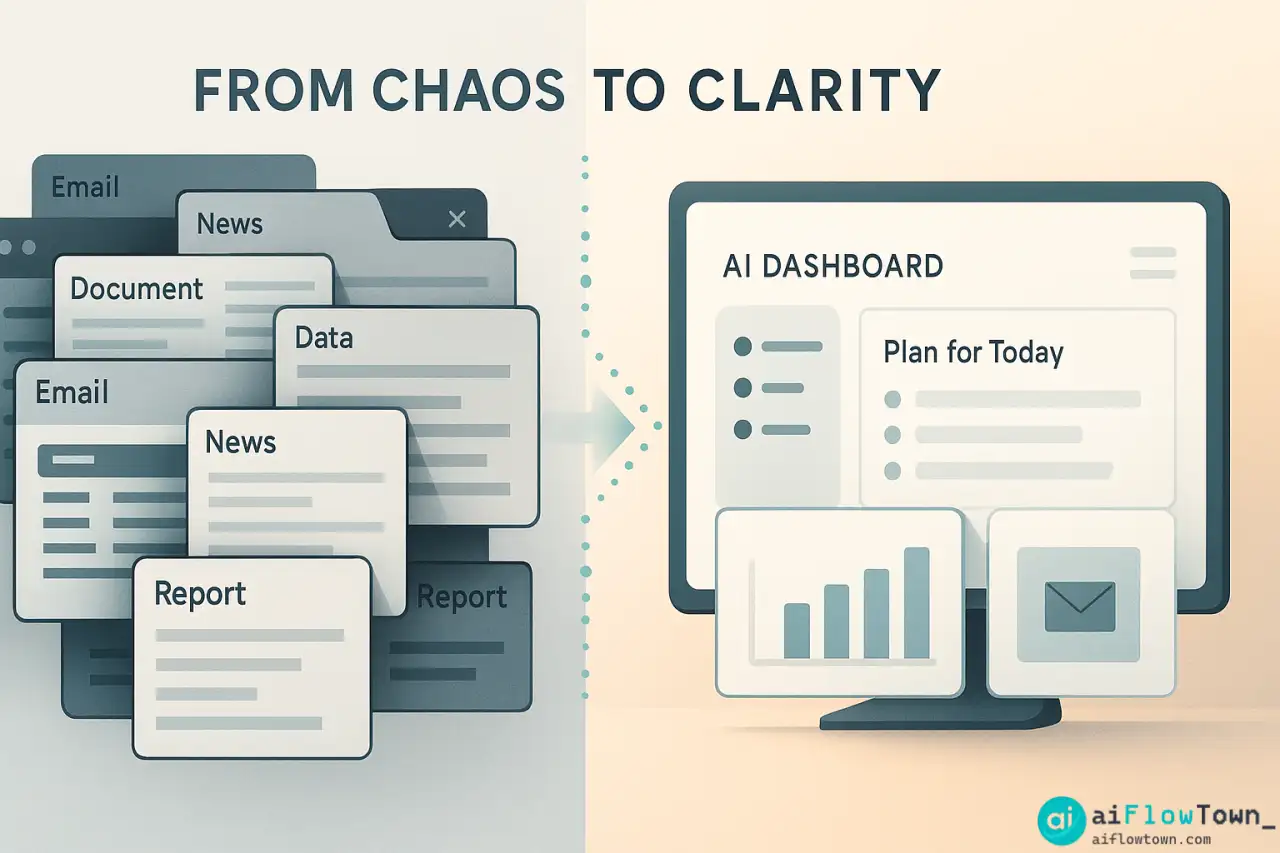
Your browser tab situation didn’t become chaos overnight, and fixing it doesn’t have to be a massive project. AI tab manager tools handle the organization automatically while you keep working the way you naturally work. The tabs stop multiplying. Your browser speeds up. Your mental overhead decreases.
Start today. Install one tool. Let it scan your current tabs. See what it suggests. You don’t have to change your behavior—just let AI handle the cleanup you’ve been avoiding.
Six months from now, you’ll look back at screenshots of your old 73-tab chaos and wonder how you ever worked that way. That moment is worth the 10-minute setup investment.
⚠️ Reminder: Even the smartest tools / AI can miss small details or make mistakes. Always double-check your work before presenting or publishing it - a quick review can save hours later.