AI-Powered Cold Emails That Actually Get Replies
Cold email outreach is tough. Your message lands in a crowded inbox, competing for a few seconds of attention. Sending generic, mass-blasted emails is a surefire way to get ignored, marked as spam, or worse, damage your brand reputation. But what if you could craft personalized, relevant, and compelling messages at scale? By leveraging the power of AI with strategic email prompts, you can transform your cold outreach from a numbers game into a relationship-building engine.
This guide provides a playbook of over 20 battle-tested cold email outreach prompts designed to work with AI tools like ChatGPT. We’ll move beyond basic templates and show you how to generate hyper-personalized hooks, craft irresistible value propositions, and write clear calls-to-action that actually get replies. Learn how to use an AI email writing assistant not just to write faster, but to write smarter. These techniques complement the broader strategies found in our collection of AI productivity prompts.
Stop guessing what works. Start using proven frameworks, amplified by AI, to write effective cold emails that open doors and build connections.
Part 1: Why Most Cold Emails Fail (And How AI Helps)
The average professional receives dozens, if not hundreds, of emails daily. Most cold emails fail because they lack the critical element of relevance. They are often:
- Generic: Missing any specific detail that connects the message to the recipient’s unique situation, role, company, or recent activity.
- Self-Centered: Overly focused on the sender’s product features or company history, rather than clearly articulating the benefit for the recipient.
- Unclear: Rambling, poorly structured, or ending with a vague or overly demanding call-to-action (e.g., “When are you free for a 30-minute demo?”).
- Poorly Timed: Sent without a relevant trigger event or context that makes the outreach feel timely and pertinent.
AI, when guided by the right prompts, can directly address these failings. It excels at rapidly processing information (like a LinkedIn profile or a news article) to find relevant personalization hooks. It can generate multiple variations of messaging quickly, helping you find the right angle. However, AI is only as good as the instructions it receives. That’s where targeted ChatGPT prompts for sales emails come in, turning a general tool into a specialized outreach assistant.
Effective cold outreach isn’t about volume; it’s about relevance. AI helps you achieve relevance at scale, but only if you ask the right questions.
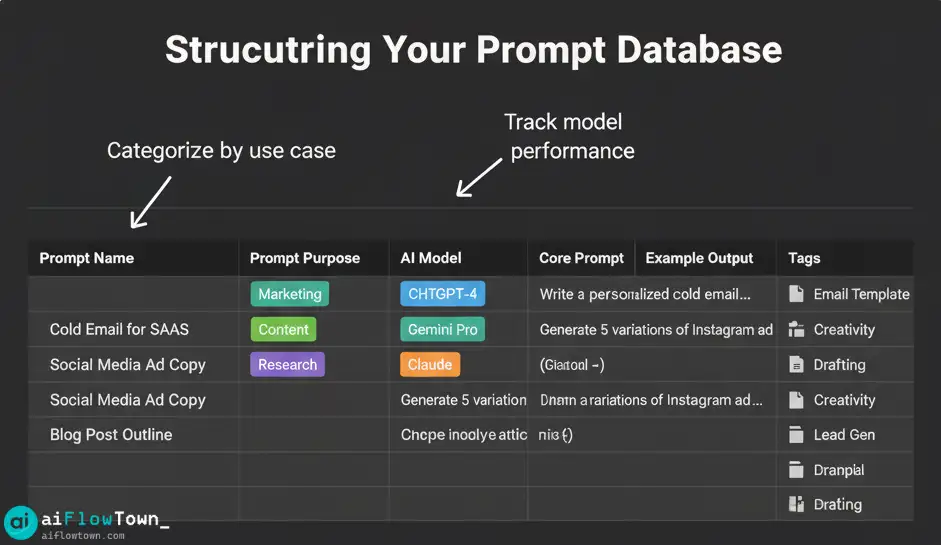
Part 2: The Prompt Library for High-Converting Cold Emails
These prompts cover the entire cold outreach process, from initial research to follow-up sequences. Remember to replace bracketed placeholders like `[Your Product/Service]` with your specific details to get the best results. Each prompt is designed as a mini-template for immediate use.
Category 1: Prospect Research & Personalization Hooks
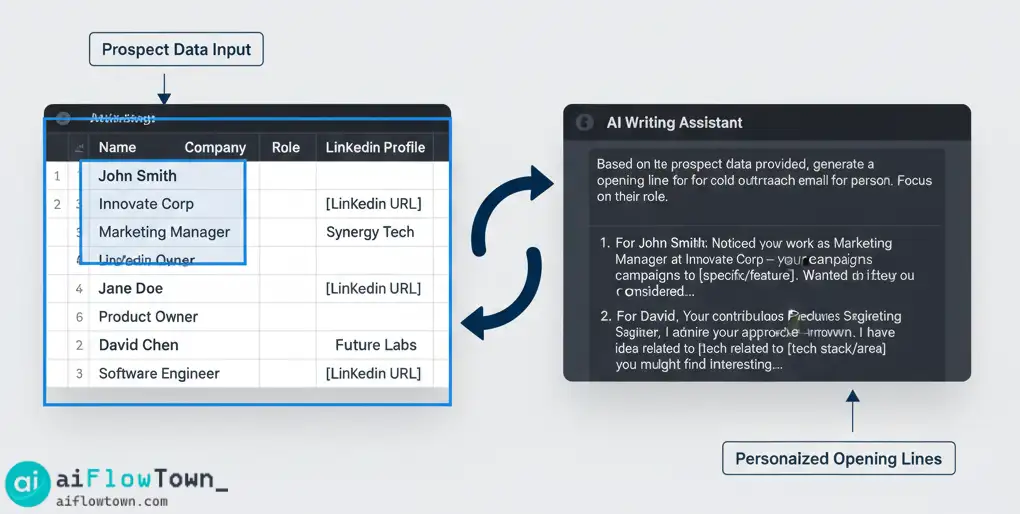
The first sentence determines if your email gets read or deleted. These prompts help you find relevant information and craft unique opening lines that show you’ve done your homework.
- 1. LinkedIn Profile Analysis Hook:
Act as a highly observant sales development representative (SDR). Analyze this LinkedIn profile summary/bio carefully: "[Paste LinkedIn Bio Text]". Based only on the information provided, identify 2-3 specific accomplishments, recently shared content, stated interests, or unique phrases that I could reference as a highly personalized and non-generic opening line for a cold email. The goal is to show I've actually read their profile. Output only the suggested opening lines. - 2. Company News/Funding Hook:
Act as a B2B sales researcher with a knack for finding relevant angles. I found this recent positive news/funding announcement about [Company Name]: "[Paste brief summary or link context]". Draft 3 compelling opening sentences for a cold email that sincerely congratulates them on this specific achievement and smoothly transitions to how our solution, [Your Solution Description, e.g., "an AI-powered market analysis tool"], could help them capitalize on this momentum or tackle a related challenge suggested by the news. - 3. Website Content Angle Hook:
Analyze the "About Us," "Mission," or "Careers" page text of this website: "[Paste Relevant Text from Website]". Identify one specific phrase, stated value, or company goal mentioned. Craft an opening line for a cold email that directly references this specific point and cleverly connects it to the primary value proposition of our product/service, which is [Your Core Value Proposition]. - 4. Common Connection Hook (Subtle):
Generate a brief, natural-sounding opening line for a cold email to [Prospect Name]. The line should subtly reference a shared connection or experience without sounding forced. Choose the most appropriate based on this context: [Select one: We attended the same conference [Conference Name], We both previously worked at [Company Name], We share a mutual connection [Connection's Name], We are both alumni of [University Name]]. - 5. Job Posting Angle Hook:
Act as a strategic sales consultant. Analyze this job posting from [Company Name] for the role of [Job Title]: "[Paste Key Responsibilities or Requirements]". Identify a key challenge, required skill, or strategic goal explicitly mentioned in the posting. Write an opening line for a cold email suggesting how our [Your Solution Type] solution directly addresses that specific need highlighted in their hiring efforts.
Category 2: Crafting the Value Proposition
Once you have their attention with a personalized hook, you need to quickly and clearly explain “What’s in it for them?” Focus on benefits, not just features.
- 6. Problem/Solution Statement (Concise):
Act as a concise B2B copywriter. Our product, [Product Name], helps [Target Audience, e.g., "marketing managers"] solve the specific problem of [Specific Problem, e.g., "tracking campaign ROI accurately"] by providing [Unique Benefit, e.g., "a unified dashboard with automated reporting"]. Condense this into a single, impactful sentence (under 20 words) that clearly states the core value proposition for a cold email. - 7. Feature-to-Benefit Bullet Points:
Take this list of our product's key features: [List 3-4 Key Features]. Translate each feature into a clear, tangible customer benefit specifically relevant to a [Prospect's Role, e.g., "Sales Director"]. Format the output as 2-3 compelling, short bullet points focusing on outcomes (e.g., "Save X hours per week," "Increase Y by Z%," "Reduce risk of Z"). - 8. Empathize with Specific Pain Point:
Write a short paragraph (2-3 sentences max) for a cold email. Start by acknowledging and empathizing with the common industry pain point of [Specific Pain Point relevant to prospect]. Then, briefly introduce how our solution, [Your Solution], is specifically designed to alleviate that particular frustration. - 9. Quantifiable Value Proposition:
Our typical client using [Product Name] achieves [Quantifiable Result, e.g., "a 15-20% increase in qualified leads within 3 months"]. Rephrase this into a compelling value proposition statement suitable for a cold email. Make it sound credible and focus on the potential outcome for the prospect. Generate 2 variations. - 10. Articulate Unique Selling Proposition (USP):
Compared to competitors in the [Your Market Space] market who typically focus on [Competitor Approach], our unique advantage with [Product Name] is [Your Specific USP, e.g., "our real-time data integration"]. Articulate this USP clearly and concisely in 1-2 sentences for a cold email, highlighting why this difference matters to the prospect.
Category 3: Adding Social Proof & Credibility
Build trust quickly by demonstrating that others, especially similar companies or individuals, have found value in your solution.
- 11. Mini Case Study Snippet:
Condense the key information from this case study: "Client: [Client Name/Industry], Problem: [Brief Problem], Solution: Used [Your Product], Result: [Quantifiable Result, e.g., Reduced processing time by 40%]" into a single, impactful sentence suitable for social proof in a cold email. Start with "We recently helped..." or "A similar company, [Client Name], used us to..." - 12. Subtle Client Name-Drop:
Craft a subtle and natural-sounding sentence for a cold email that mentions a well-known, non-competitive client who is relevant to the prospect's industry or size. The goal is to build credibility without bragging. Example structure: "Our work with companies like [Well-Known Client] often involves tackling challenges such as [Prospect's Likely Challenge]." - 13. Statistic/Award Highlight:
Turn this impressive statistic or award related to our product/company: "[Statistic or Award, e.g., 'Rated #1 for Customer Support on G2']" into a short, impactful sentence that demonstrates credibility and builds trust.
Category 4: The Call-to-Action (CTA)
Make it easy and low-friction for the prospect to take the next step. Avoid overly aggressive or demanding requests.
- 14. Low-Friction Interest Check CTA:
Write 3 variations of a soft, low-commitment call-to-action for the end of a cold email. The goal is simply to gauge interest in learning more, not to book a meeting immediately. Example structures: "Is exploring [Benefit] something that's currently on your radar?", "Open to learning more if this resonates?", "Worth a brief chat sometime?" - 15. Specific Time Proposal CTA (Optional):
Write a clear and specific call-to-action proposing a very brief (10-15 minute) introductory call. Offer two specific, narrow time windows as options to make scheduling easy. Example: "Would you be open to a quick 10-minute call next Tuesday afternoon or Thursday morning to see if this is relevant?" - 16. Value-Based CTA (Offering Resource):
Write a call-to-action that offers a specific, high-value resource (e.g., "our latest industry report on X," "a free template for Y," "a short video explaining Z") instead of directly asking for a meeting. Frame it as providing value first. Example: "Happy to share the [Resource Name] if it's helpful – just let me know." - 17. Question-Based CTA (Conversation Starter):
Write an open-ended, non-salesy question as a call-to-action. The question should be relevant to the prospect's role or industry and designed to start a conversation rather than book a meeting. Example: "How is your team currently approaching [Challenge related to your solution]?"
Category 5: Subject Lines
Your subject line has one job: get the email opened. It needs to be intriguing, personalized, or benefit-driven.
- 18. Personalized Subject Line Ideas:
Generate 5 short, intriguing, and personalized subject line ideas for a cold email to [Prospect Name], Founder at [Company Name]. Reference one of these specific personalization points: [Select one: their recent podcast appearance, a specific point from their latest blog post, a mutual connection's recommendation]. Avoid generic phrases. - 19. Benefit-Driven Subject Line Ideas:
Write 5 compelling subject lines that clearly highlight the core benefit of our product, which is [Core Benefit, e.g., "saving 5 hours per week on reporting"]. Try using numbers, questions, or curiosity gaps. - 20. Curiosity-Based Subject Line Ideas:
Generate 5 subject lines designed purely to pique curiosity about [Topic relevant to your email] without giving away the main point. Make them short and intriguing.
Category 6: Follow-Up Prompts
Persistence is key, but follow-ups must add value or gently remind, not annoy.
- 21. Simple “Bump” Email:
Write a very short (2-3 sentences max), polite "bump" email to follow up on my previous message sent [Number] days ago regarding [Topic]. Gently resurface the email without being demanding. - 22. Value-Add Follow-Up Idea:
Act as a helpful consultant. Suggest one specific piece of value I could offer in a follow-up email to [Prospect Name] who works in [Industry/Role], based on my initial email about [Topic]. This could be a link to a relevant article (not my own), a useful statistic, or a brief insight. Then, draft the follow-up email incorporating this value. - 23. Polite “Break-Up” Email:
Write a final, polite, and professional "break-up" email. Indicate this will be my last follow-up regarding [Topic]. Briefly reiterate the potential value, offer help in the future if timing isn't right now, and optionally ask if there's someone else at their company who might be a better fit to speak with. Keep it short and respectful.
Cold Email Prompt Frameworks
Instead of single prompts, you can ask the AI to structure entire emails using proven sales frameworks:
| Framework | Description | Example Prompt |
|---|---|---|
| AIDA | Attention, Interest, Desire, Action | |
| PAS | Problem, Agitate, Solve | |
| BAB | Before, After, Bridge | |
Part 3: Putting It All Together – Best Practices
Using these email prompts effectively requires more than just copying and pasting. The goal is augmentation, not complete automation.
- Always Personalize Placeholders: Faithfully replace bracketed text like `[Your Name]`, `[Prospect Name]`, `[Product Name]`, etc., with specific, accurate details. Generic placeholders defeat the purpose.
- Review, Edit, Humanize: AI drafts are starting points, not final copy. Always review the output for tone, accuracy, and natural language flow. Inject your own personality and ensure it doesn’t sound robotic. Remove any AI “hallucinations” or awkward phrasing.
- Test and Iterate Relentlessly: Cold outreach is a process of continuous improvement. Track your open rates, reply rates, and conversion rates for different prompts, subject lines, and CTAs. Use AI to help you generate A/B test variations easily. Find what resonates best with your specific audience.
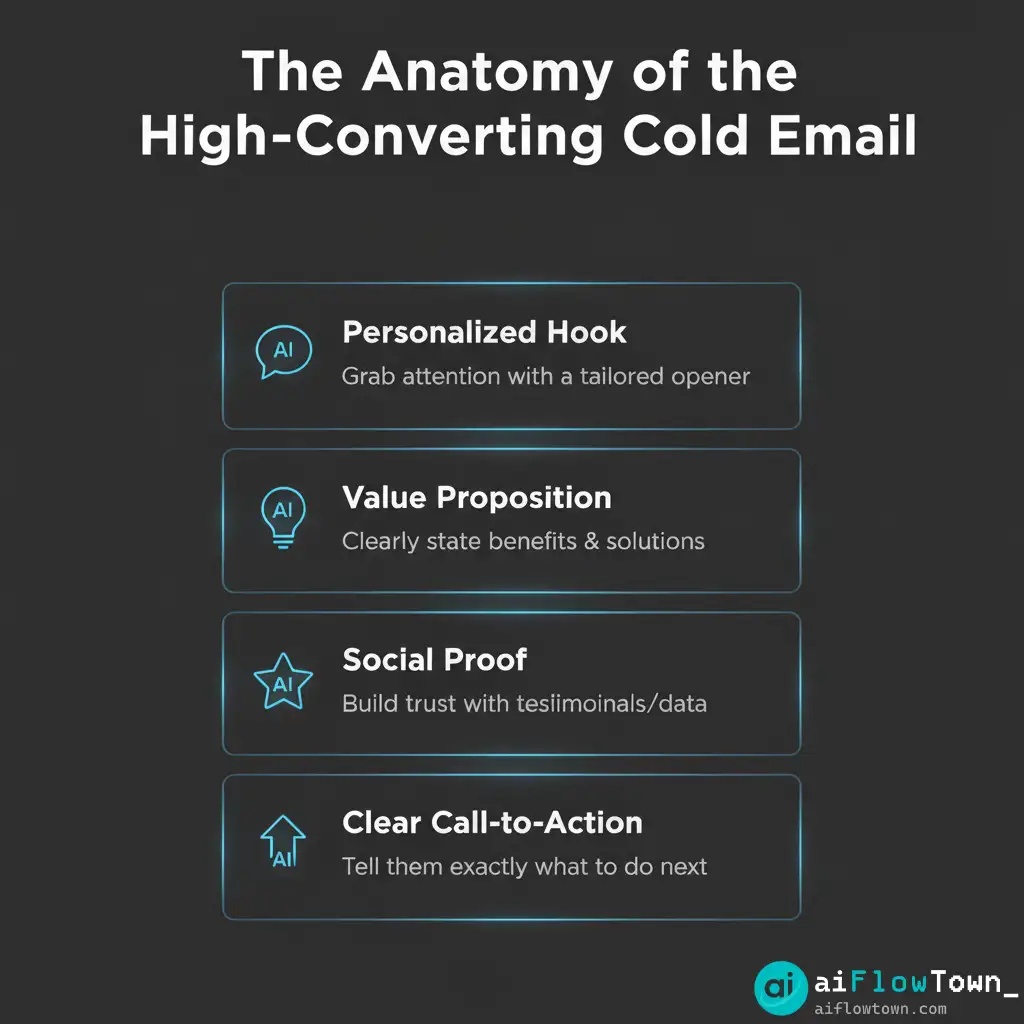
- Combine Prompts for Full Emails: A truly effective cold email often combines outputs from multiple prompts. For example: Use Prompt #2 (Company News Hook) for the opening line + Prompt #7 (Benefit Bullets) for the value prop + Prompt #11 (Case Study Snippet) for social proof + Prompt #14 (Interest Check CTA) for the closing.
- Focus on Value First: Ensure every email, especially follow-ups, provides some form of value or relevance to the recipient. Avoid simply asking for their time repeatedly.
Integrating these prompts thoughtfully into your workflow can significantly improve email open rates and, more importantly, the quality of conversations started.
Conclusion: The Future of Personalized Outreach at Scale
Cold emailing is evolving. Generic, untargeted blasts are dead. The future belongs to those who can combine genuine human empathy and strategic thinking with the scale and speed afforded by AI. These email prompts provide the essential framework for doing just that.
By using AI as your intelligent writing assistant, guided by these expert instructions, you can move from dreading cold outreach to executing it with confidence, precision, and personalization. Start with the personalization prompts—they often make the biggest difference in getting your foot in the door. Pick a few relevant sales prospecting prompts, add your specific context, and begin building meaningful business relationships, one smart, AI-assisted email at a time. Explore our full prompt library for even more ideas across different domains.
❓ FAQ
❓ Are AI-generated cold emails effective?
They can be highly effective, if used correctly. The key is using AI to enhance personalization and relevance at scale, not just to generate generic text faster. A well-prompted AI helps you research prospects and tailor messages, leading to much better results than manual, generic outreach. Always review and humanize the output.
Which AI tool is best for writing cold emails?
Most advanced large language models like ChatGPT (especially GPT-4), Claude 3, and Gemini can handle these prompts well. The “best” often depends on personal preference regarding tone and writing style. Many specialized AI sales tools also incorporate similar prompting techniques, often integrated with CRM data.
❓How to personalize cold emails with AI?
Use AI prompts (#1-5 in this guide) to analyze a prospect’s LinkedIn profile, recent company news, website content, or job postings. Ask the AI to identify specific points you can reference naturally in your opening line. This shows you’ve done your research and makes the email instantly more relevant, dramatically increasing open and reply rates.
Will using AI make my emails sound robotic?
Only if you use generic prompts and fail to edit the output. Always include instructions about the desired tone (e.g., “friendly and conversational,” “professional and concise,” “empathetic and helpful”) in your prompt. Most importantly, treat the AI output as a first draft. Always review, refine, and add your own voice before sending any email.
⚠️ Reminder: Even the smartest tools / AI can miss small details or make mistakes. Always double-check your work before presenting or publishing it - a quick review can save hours later.