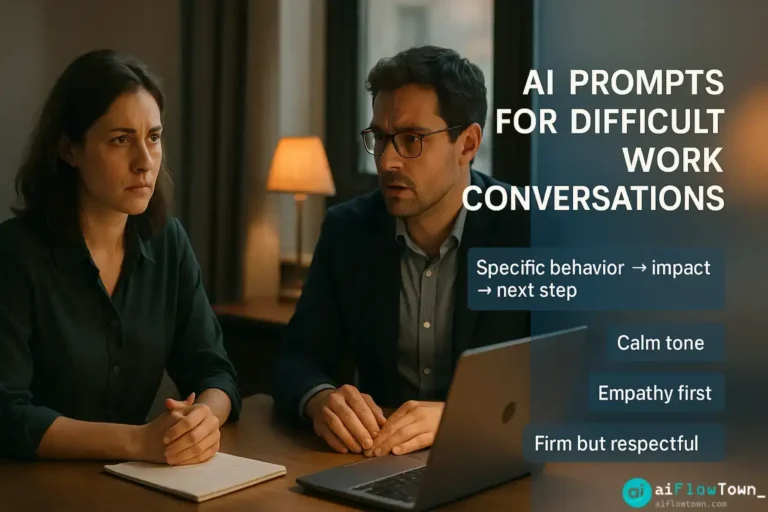
Why Difficult Conversations Paralyze Us
You know you need to address the issue. You’ve rehearsed it in your head a dozen times. But when the moment comes, either you avoid the conversation entirely, or words come out wrong—too harsh, too soft, or confusing. The fear isn’t irrational: difficult conversations can go sideways fast. Say too much, you escalate. Say too little, nothing changes.
The challenge isn’t that you don’t know the problem—it’s finding language that:
- ⚠️ Addresses the real issue without attacking the person
- ⚠️ Stays calm even when you’re frustrated
- ⚠️ Sets clear expectations without sounding controlling
- ⚠️ Maintains the relationship while solving the problem
- ⚠️ Anticipates defensive reactions and stays constructive
Using ai conversation prompts doesn’t script your conversation—it helps you think it through beforehand. You prepare better, anticipate reactions, and enter the conversation with clarity instead of anxiety using ai prompts for difficult conversations at work. For more communication strategies, visit AI productivity prompts.
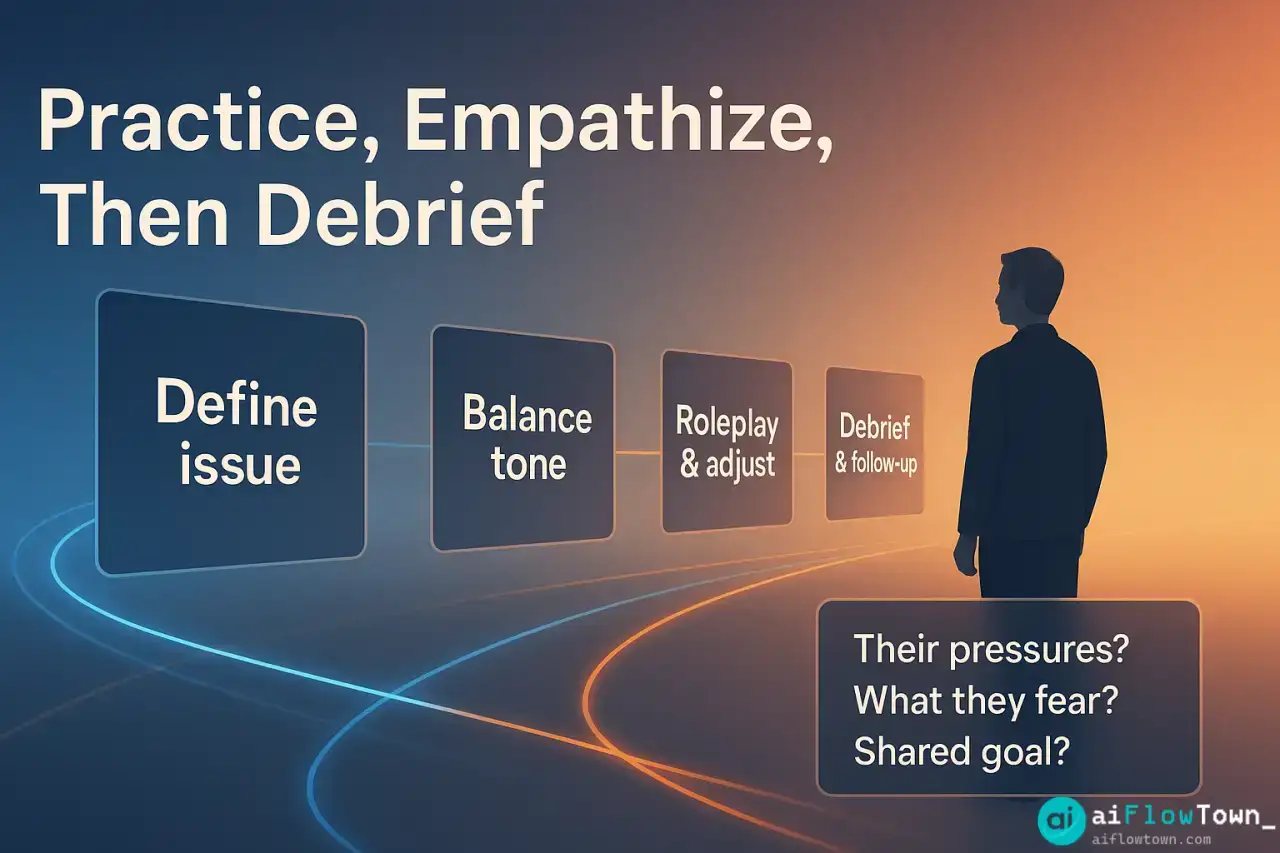
The Tone Balance Framework
Finding the Right Approach
| Conversation Type | Tone Balance | What to Emphasize |
|---|---|---|
| Performance feedback | Direct but supportive | Specific behaviors, impact, path forward |
| Interpersonal conflict | Calm and collaborative | Your experience, not accusations |
| Setting boundaries | Firm but respectful | Your needs, consequences, alternatives |
| Disagreement with authority | Respectful but clear | Reasoning, data, shared goals |
| Delivering bad news | Honest but empathetic | Facts, context, next steps |
Different situations need different balances. AI helps you calibrate tone appropriately using prepare for workplace conflict with ai help systematically. Learn more at AI workflow examples.
Core Prompts for Different Scenarios
Addressing Performance Issues
"Help me prepare for a performance conversation.

Situation:
- Person: [Name/role]
- Issue: [Specific behavior or performance problem]
- Impact: [How it affects work/team/results]
- Previous discussions: [Have you talked about this before?]
- Your relationship: [Manager/peer/skip-level]

What I need:
1. Opening statement that's clear but not attacking
2. Specific examples to reference (use my notes: [examples])
3. How to frame expectations going forward
4. Potential defensive responses and how to address them
5. Clear action items and timeline

Tone: Direct and supportive—I want to help them improve, not just criticize
Avoid: Vague feedback, personal attacks, over-softening the issue
Goal: They leave understanding what needs to change and feeling capable of changing it"
"I need to address a conflict between team members.

Situation:
[Describe the conflict from neutral perspective]

My role: [Manager mediating / Peer caught in middle / One of the parties]

Help me prepare:
1. How to open the conversation without taking sides
2. Questions to ask that help each person feel heard
3. How to identify the real issue beneath surface complaints
4. Ways to guide them toward solution without imposing one
5. What to do if conversation escalates

Also suggest:
- Ground rules to set before starting
- Phrases to de-escalate if tensions rise
- How to end with clear agreements

Tone: Neutral facilitator, not judge or referee"
This structure helps with practice tough conversations using chatgpt before they happen.
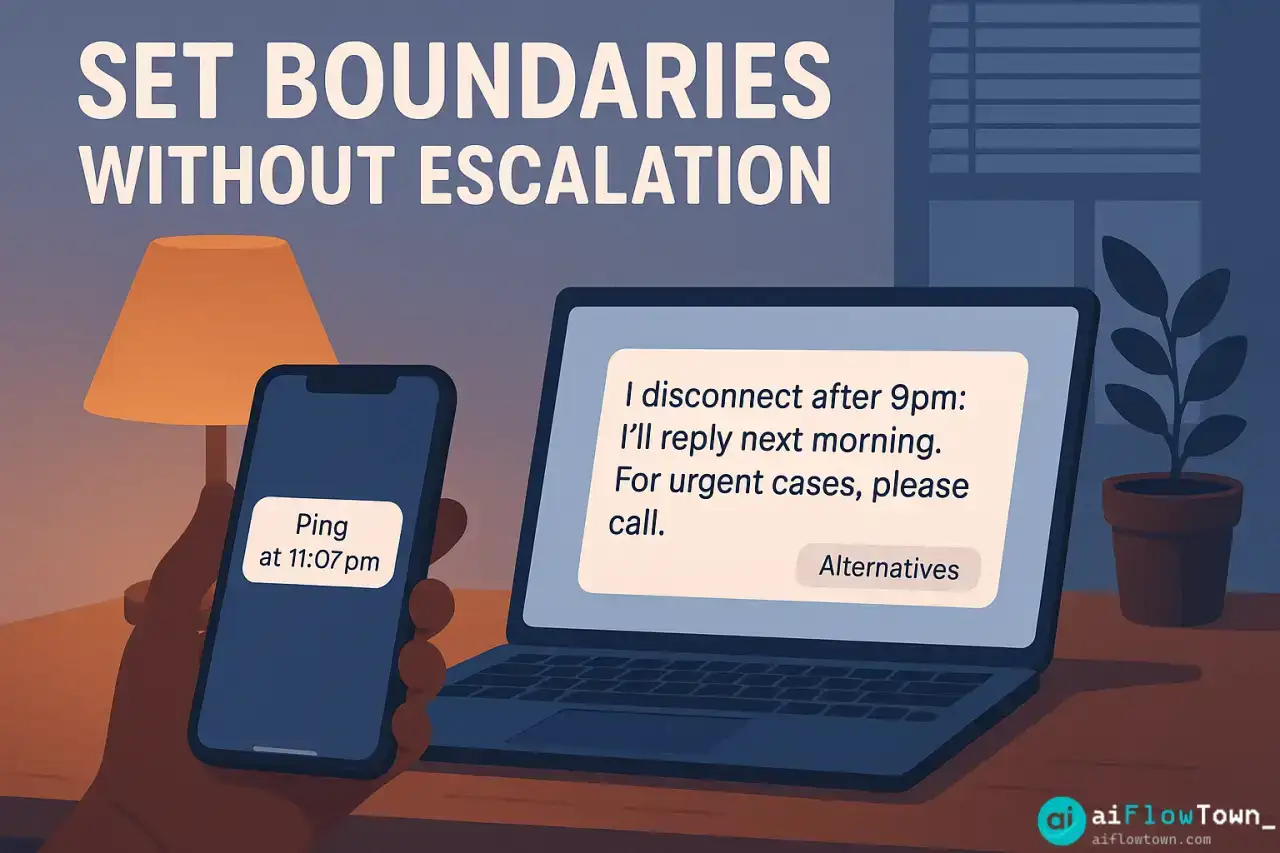
Setting Professional Boundaries
"I need to set a boundary at work.

The situation:
[What's happening that you need to address]

The boundary I need to set:
[What behavior needs to stop or change]

Complicating factors:
[Power dynamics, past history, fear of consequences]

Help me craft:
1. Opening that acknowledges the relationship while introducing boundary
2. Clear statement of what I need (not what they're doing wrong)
3. Explanation of why this matters (impact on my work/wellbeing)
4. Consequences if boundary isn't respected (realistic, not threats)
5. Alternative solutions that meet both our needs

Tone: Firm but respectful—this isn't negotiable, but I want to maintain professional relationship"
AI Roleplay for Practice
Beyond preparation, use AI to practice the conversation:
"Roleplay this difficult conversation with me.

You play: [The person you're talking to]
Their personality: [Defensive / Emotional / Dismissive / Collaborative]
The situation: [Brief context]

I'll start the conversation. You respond as they likely would based on:
- Past reactions to feedback
- Their communication style
- Likely concerns or objections

After 3-4 exchanges, stop and analyze:
- What's working in my approach?
- Where am I losing them?
- What should I adjust?
- What defensive reactions should I prepare for?

Then let's try again with improvements."
This practice reduces anxiety and reveals gaps in your approach using write feedback scripts with ai assistance interactively. For more strategies, check productivity flow hacks.
The Empathy Layer
Understanding Their Perspective
Before any difficult conversation, ask AI to help you see the other side:
"Help me understand the other person's perspective.

The situation from my view:
[Your version of events and concerns]

What I know about them:
- Their pressures and constraints
- Past behavior patterns
- What matters to them professionally

Help me understand:
1. How might they see this situation differently?
2. What valid concerns might they have?
3. What am I potentially missing or dismissing?
4. What would a charitable interpretation of their behavior be?
5. What might they be afraid of in this conversation?

Be honest—challenge my assumptions if they seem unfair."
This empathy work prepares you to listen, not just speak.
Finding Common Ground
“Based on what I want and what they likely want, identify: shared goals we can reference, mutual frustrations we both experience, solutions that serve both interests, language that frames this as ‘us solving a problem’ not ‘me vs them.'”
Conversation Type Comparisons
Feedback Conversation Example
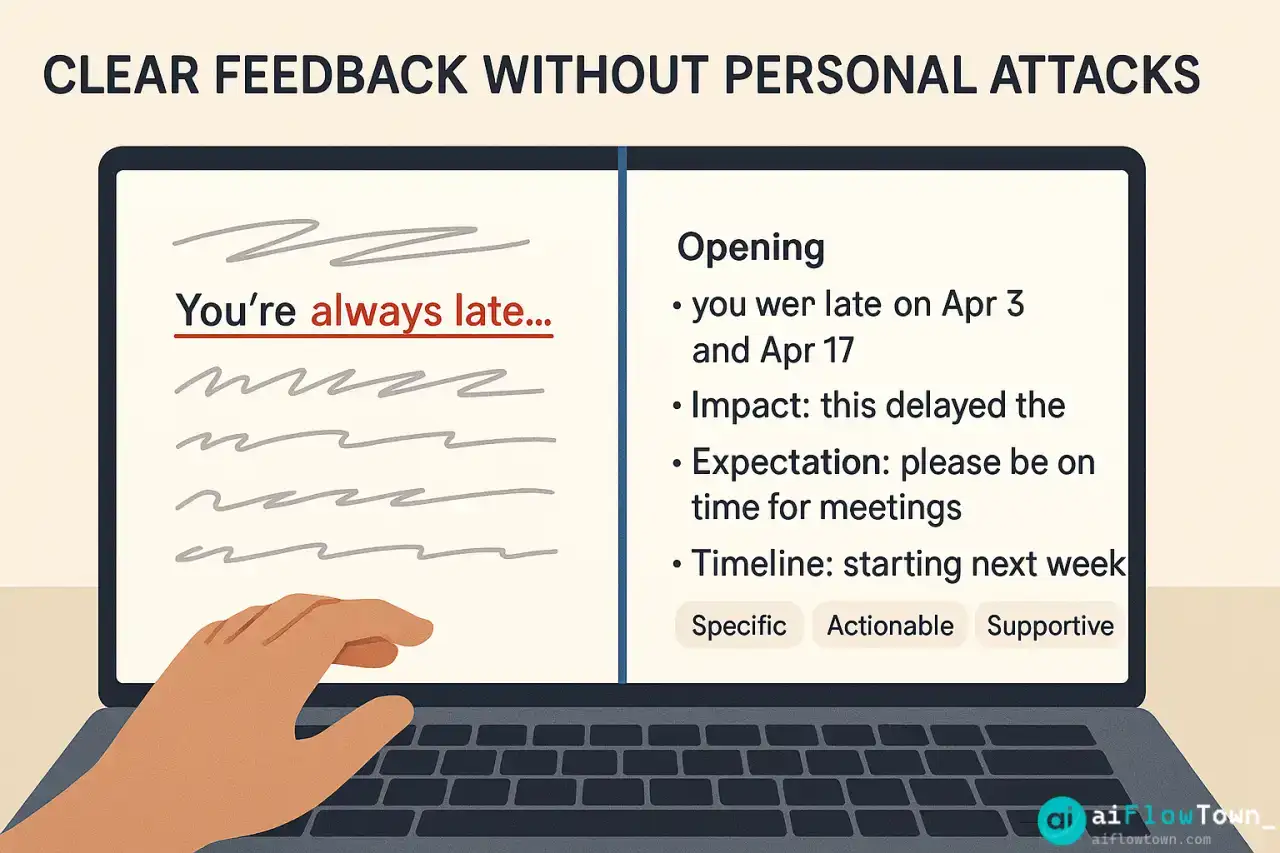
What NOT to say:
“You’re always late to meetings and it’s really unprofessional. People are starting to notice and it’s making you look bad. You need to be more responsible about time management.”
Problems: “Always” is accusatory, “unprofessional” is judgmental, focuses on perception not impact, vague about expectations.
AI-refined version:
“I want to discuss meeting timeliness. Over the past three weeks, you’ve arrived 10-15 minutes late to four team meetings. When this happens, we either wait and waste others’ time, or start without you and you miss context. I need you to arrive on time, or let me know in advance if you’ll be late. Can we talk about what’s making this difficult and how to solve it?”
– Constructive Feedback –
Better because: Specific examples, focuses on impact, clear expectation, opens dialogue about solutions.
Boundary Setting Example
What NOT to say:
“You can’t keep messaging me at 11pm. It’s not fair and I have a life outside of work. You need to respect my personal time.”
Problems: Accusatory, defensive, doesn’t offer solution, potentially damages relationship.
AI-refined version:
“I want to discuss communication outside work hours. I’ve been receiving messages after 9pm several times weekly. I need to disconnect evenings to recharge and maintain effectiveness. Going forward, I’ll respond to non-urgent messages the next morning. For true emergencies, you can call my phone. Does this work, or do we need a different system for urgent issues?”
– Professional Boundary –
Better because: States need clearly, proposes solution, acknowledges legitimate urgent needs, maintains professionalism using set professional boundaries using ai prompts effectively.
Safety and Self-Care
When Conversations Feel Unsafe
Some situations require extra precautions:
- ⚠️ Person has history of aggressive reactions
- ⚠️ Significant power imbalance exists
- ⚠️ Your job security might be threatened
- ⚠️ Previous conversations escalated badly
- ⚠️ Issue involves harassment or discrimination
For these situations, ask AI:
"This is a high-stakes, potentially unsafe conversation. Help me:

1. Decide if I should have this conversation at all, or escalate to HR/management
2. If proceeding, what precautions to take (witness, documentation, timing)
3. How to keep conversation factual and documented
4. Warning signs that I should end the conversation
5. What to do if it escalates

Context: [Describe why this feels risky]"
AI can’t replace judgment about personal safety, but helps you think through risks systematically.
Post-Conversation Debrief
After the conversation, process it with AI:
“The conversation happened. Here’s how it went: [summary]. Help me: assess what went well, identify what I could improve, determine appropriate follow-up, decide if additional conversation needed.”
❓ FAQ
Should I memorize the AI-prepared script?
No. Use AI prep to understand your key points and practice phrasing, but speak naturally during actual conversation. If you sound scripted, it feels inauthentic. Internalize the approach, not the exact words.
⏰ When should I have these conversations?
Earlier in the day when both parties have energy. Not Friday afternoon. Not right before/after other stressful events. Give the person heads-up: “Can we talk about [topic] tomorrow at 2pm?” so they’re not ambushed and defensive.
Should I document these conversations?
For performance issues or serious conflicts, yes. After conversation, email summary: “Following our discussion, here’s what we agreed: [summary]. Please let me know if I missed anything.” Creates shared record without being threatening.
What if they react worse than AI predicted?
Have an exit strategy. If conversation escalates despite your best efforts: “I can see we’re both frustrated. Let’s pause and revisit this tomorrow when we’re calmer.” Then actually pause. Forcing through heated conversation rarely improves it.
How do I stay calm during the conversation?
Preparation reduces anxiety significantly. Before conversation: take 3 deep breaths, remind yourself of your key points, remember your goal is solving the problem not winning argument. During: pause before responding if you feel triggered.
Final Thoughts
Difficult conversations don’t get easier by avoiding them—they get easier by preparing well. AI conversation prompts help you think through what you need to say, how the other person might react, and what you’re trying to accomplish. The preparation reduces anxiety and increases the chance of productive outcomes.
Next time you’re dreading a tough conversation, spend 15 minutes with AI working through it. You’ll enter the conversation clearer, calmer, and more likely to achieve the result you need while maintaining the relationship. That’s not avoiding the hard work of communication—it’s doing it more effectively.
The conversations that keep you up at night get easier when you’ve already practiced them in your head with help from someone who won’t judge you for trying.
⚠️ Reminder: Even the smartest tools / AI can miss small details or make mistakes. Always double-check your work before presenting or publishing it - a quick review can save hours later.