Introduction
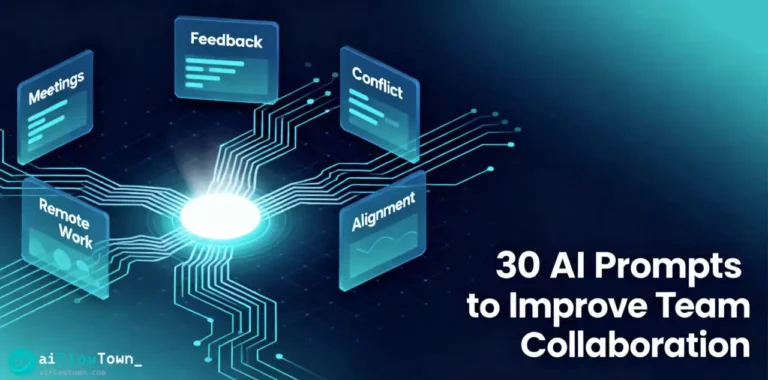
Your team talks constantly but communicates poorly. Meetings drift without decisions. Feedback lands awkwardly. Conflicts simmer unaddressed. Projects slip because nobody’s clear on who’s doing what. These aren’t personnel problems—they’re coordination problems. AI prompts can’t fix team dysfunction, but they can structure conversations, clarify expectations, surface hidden issues, and create frameworks that make collaboration actually work. These 30 prompts transform vague team interactions into productive coordination.
Why Team Collaboration Fails
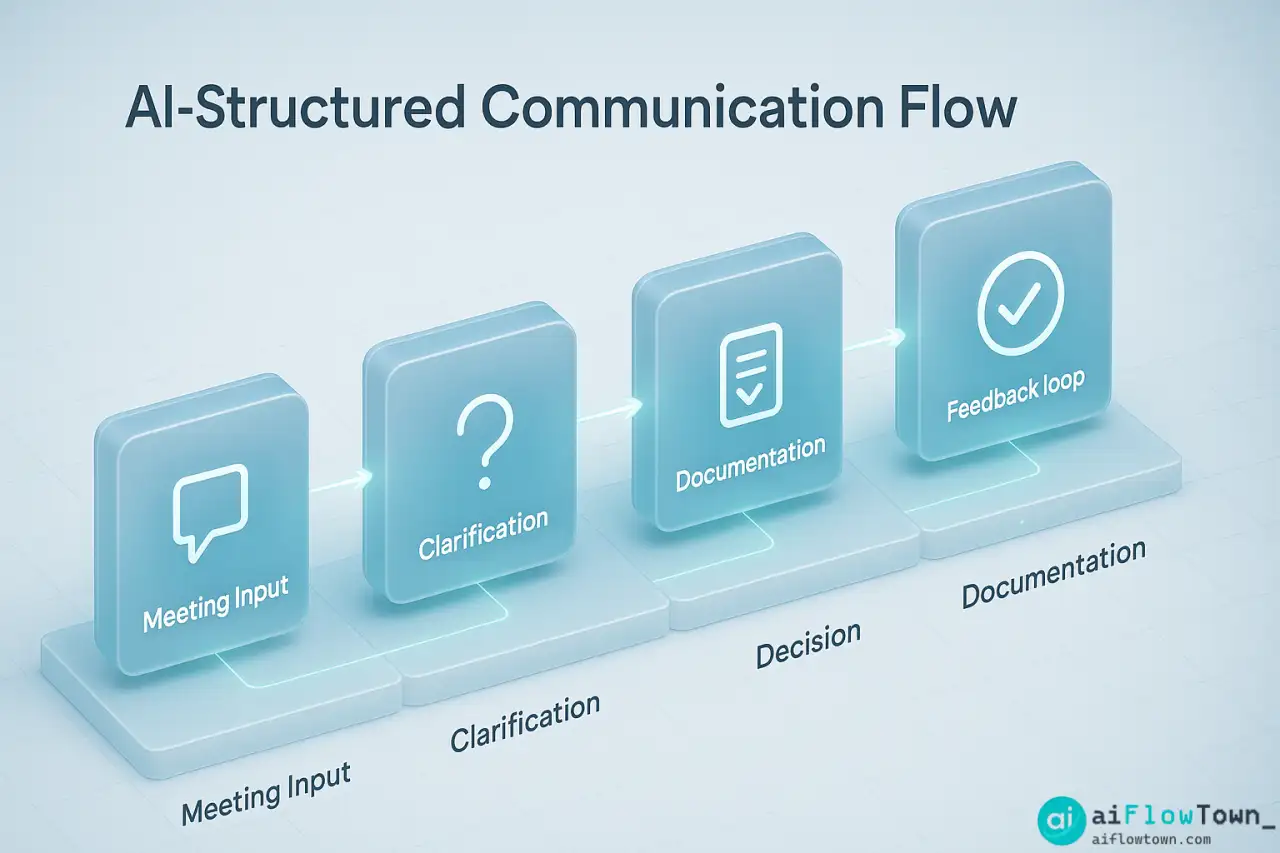
Teams don’t fail because people don’t care. They fail because:
- ⚠️ Assumptions go unstated until they cause problems
- ⚠️ Feedback is either too soft (useless) or too harsh (damaging)
- ⚠️ Meetings lack structure and accountability
- ⚠️ Conflicts avoided until they explode
- ⚠️ Remote work makes coordination invisible
- ⚠️ Everyone’s “aligned” until they execute differently
These teamwork prompts provide structure that makes implicit coordination explicit using ai prompts for team collaboration systematically.
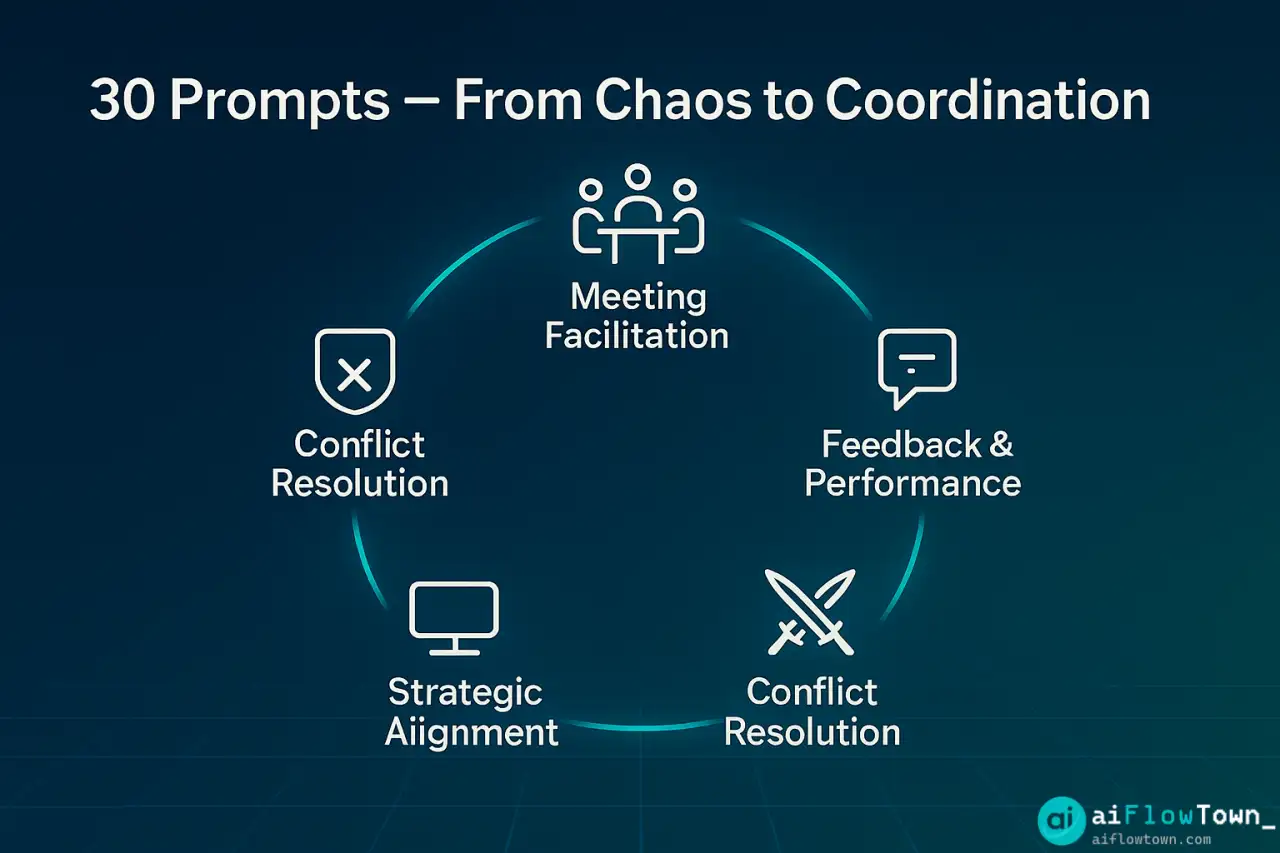
Category 1: Meeting Facilitation (Prompts 1-6)
Prompt 1: Pre-Meeting Clarity Generator
"Design an effective meeting for this situation:

Meeting purpose: [What needs to happen]
Attendees: [Who's invited and their roles]
Time available: [Duration]
Current state: [What's the context/problem]

Generate:
1. Clear meeting objective (one sentence)
2. Agenda with time blocks
3. Pre-work for attendees (what to prepare)
4. Success criteria (what "good meeting" looks like)
5. Decision framework (how we'll decide if disagreement)

Make this concrete enough that anyone could facilitate it."
Prompt 2: Real-Time Meeting Redirect
"This meeting is going off track. Help me redirect:

Original goal: [What we came to do]
Where we are now: [What's actually happening]
Time remaining: [Minutes left]

Give me a diplomatic way to:
- Acknowledge the tangent's value
- Redirect to original purpose
- Decide what to do with tangent (parking lot, separate meeting, drop)
- Refocus on what we can accomplish in remaining time"
Prompt 3: Decision Documentation
"Document decisions from this meeting:

Raw meeting notes: [Paste discussion notes]

Extract and format:
1. Decisions made (what was decided, rationale)
2. Action items (who, what, by when)
3. Open questions (what still needs deciding)
4. Disagreements noted (what wasn't resolved)
5. Next meeting needs (follow-up required?)

Make scannable—people should understand in 60 seconds."
These prompts enable improve team communication with chatgpt through structured meeting management. For more meeting strategies, visit prompt library.
Prompt 4: Async Meeting Alternative
"Could this meeting be async? Evaluate:

Proposed meeting: [Topic, attendees, duration]

Assess:
- Does this require real-time discussion or could it be document + comments?
- If async possible, design the workflow (who creates doc, who reviews, deadline, decision process)
- If meeting necessary, explain why (what specifically requires synchronous discussion)

Don't default to meetings. Challenge the assumption."
Prompt 5: Inclusive Meeting Check
"Ensure everyone's voice in this meeting:

Topic: [What we're discussing]
Attendees: [List with roles]

For each person, suggest:
- Specific question to ask them (leverages their expertise)
- Potential concern they might have (invite their input)
- Why their perspective matters for this decision

Identify: Who might stay quiet but has valuable input?"
Prompt 6: Post-Meeting Feedback
"Was this meeting effective? Analyze:

Meeting data:
- Duration: [Actual vs planned]
- Agenda adherence: [What we covered vs planned]
- Decisions made: [Count]
- Action items: [Count with owners]
- Attendee engagement: [Who spoke, who didn't]

Evaluate:
- Was this worth everyone's time?
- What should we do differently next time?
- Should this be a recurring meeting or one-off?"
Category 2: Feedback and Performance (Prompts 7-12)
Prompt 7: Constructive Feedback Framework
"Help me give feedback that actually helps:

Situation: [What happened]
My concern: [What bothers me]
Relationship: [Peer / Report / Manager]
Their likely reaction: [Defensive / Open / Unaware]

Draft feedback that:
- Focuses on behavior, not personality
- Gives specific examples
- Explains impact on team/work
- Suggests path forward
- Maintains relationship

Tone: [Direct / Gentle / Formal] based on relationship."
Prompt 8: Receiving Feedback Well
"I just received critical feedback. Help me process:

Feedback received: [What they said]
My immediate reaction: [Defensive / Hurt / Confused]

Help me:
1. Identify what's valid vs defensiveness
2. Find the kernel of truth even if delivery was poor
3. Determine what I should actually change
4. Draft response that shows I'm taking it seriously without over-apologizing

Be honest—is their feedback fair?"
Prompt 9: 360 Feedback Synthesis
"Synthesize feedback patterns from my team:

Feedback collected: [Anonymous responses from 5+ people]

Analyze:
- Themes mentioned by multiple people (these are real)
- One-off comments (might be outliers)
- Contradictions (different perspectives on same behavior)
- Blind spots (what I probably don't see about myself)

Prioritize: What should I work on first based on frequency and impact?"
Prompt 10: Recognition and Appreciation
"Draft meaningful recognition for team member:

Person: [Name and role]
What they did: [Specific contribution]
Impact: [How it helped team/project/company]
Delivery: [Public (Slack) / Private (email) / Formal (review)]

Make it specific, not generic. Avoid:
- 'Great job!' (too vague)
- 'Team player!' (meaningless)

Include: Exact behavior to repeat, why it mattered."
Prompt 11: Performance Calibration
"Help calibrate my expectations:

Team member performance: [Describe output and behavior]
My assessment: [Exceeding / Meeting / Below expectations]
Their experience level: [Junior / Mid / Senior]

Reality check:
- Are my expectations realistic for their level?
- Am I comparing to top performers unfairly?
- What's "good enough" vs "excellent" for this role?
- Should I adjust expectations or provide more support?"
Prompt 12: Growth Conversation Prep
"Prepare career growth discussion:

Team member: [Name, role, tenure]
Current strengths: [What they do well]
Development areas: [Where they struggle]
Their stated goals: [What they want]

Design conversation:
1. Skills to develop for next level
2. Stretch projects to offer
3. Timeline and milestones
4. Support I'll provide
5. How we'll measure progress

Make actionable, not vague career advice."
Category 3: Conflict Resolution (Prompts 13-18)
Prompt 13: Conflict Analysis
"Diagnose this team conflict:

The situation: [What's happening]
Parties involved: [Who's in conflict]
Surface issue: [What they're arguing about]

Identify:
- Real issue underneath (values? resources? communication?)
- What each person actually needs (beyond what they're demanding)
- Common ground (what do they agree on?)
- Root cause (why did this develop?)

Suggest mediation approach."
Prompt 14: Difficult Conversation Prep
"Prepare for difficult team conversation:

Issue: [What needs addressing]
Stakes: [Why this matters]
Likely resistance: [What objections I'll hear]

Help me:
1. Open the conversation (set tone, state purpose)
2. Present facts without accusation
3. Listen for their perspective (questions to ask)
4. Find solution collaboratively (not impose)
5. Define next steps and accountability

Practice dialogue—what will they say, how do I respond?"
Prompt 15: Disagreement Resolution
"We disagree on approach. Find resolution:

Option A: [My preferred approach and rationale]
Option B: [Their preferred approach and rationale]
Decision criteria: [Speed / Quality / Cost / Risk]

Evaluate objectively:
- Pros/cons of each
- Which better fits our criteria
- Is there a hybrid approach?
- If still unclear, what experiment would prove which is better?

Remove ego—what's actually best?"
Prompt 16: Team Tension Identification
"Detect team issues before they explode:

Recent observations:
- [Communication pattern changes]
- [Body language in meetings]
- [Response time delays]
- [Passive-aggressive comments]

Analyze:
- Is there a pattern or isolated incident?
- Who's involved (directly or indirectly)?
- What might be the underlying issue?
- How urgent is intervention?

Suggest low-key way to address before it escalates."
Prompt 17: Accountability Without Blame
"Someone missed a deadline. Address without blaming:

What happened: [Specific missed commitment]
Impact: [How this affected others]
Context: [Any mitigating factors I know]

Draft message that:
- States facts clearly
- Focuses on impact, not blame
- Seeks understanding of what went wrong
- Collaborates on preventing recurrence
- Maintains trust

Tone: Firm but supportive, not punitive."
Prompt 18: Mediation Facilitation
"Facilitate resolution between two team members:

Person A's perspective: [Their view]
Person B's perspective: [Their view]
Impact on team: [Why this needs resolving]

Design mediation:
1. Ground rules for conversation
2. Questions to ask each person
3. How to find common ground
4. Path to agreement
5. Follow-up to ensure resolution sticks

Keep neutral—I'm facilitating, not judging."
These prompts demonstrate resolve team conflicts with ai assistance through structured approaches. For more team strategies, visit AI workflows.
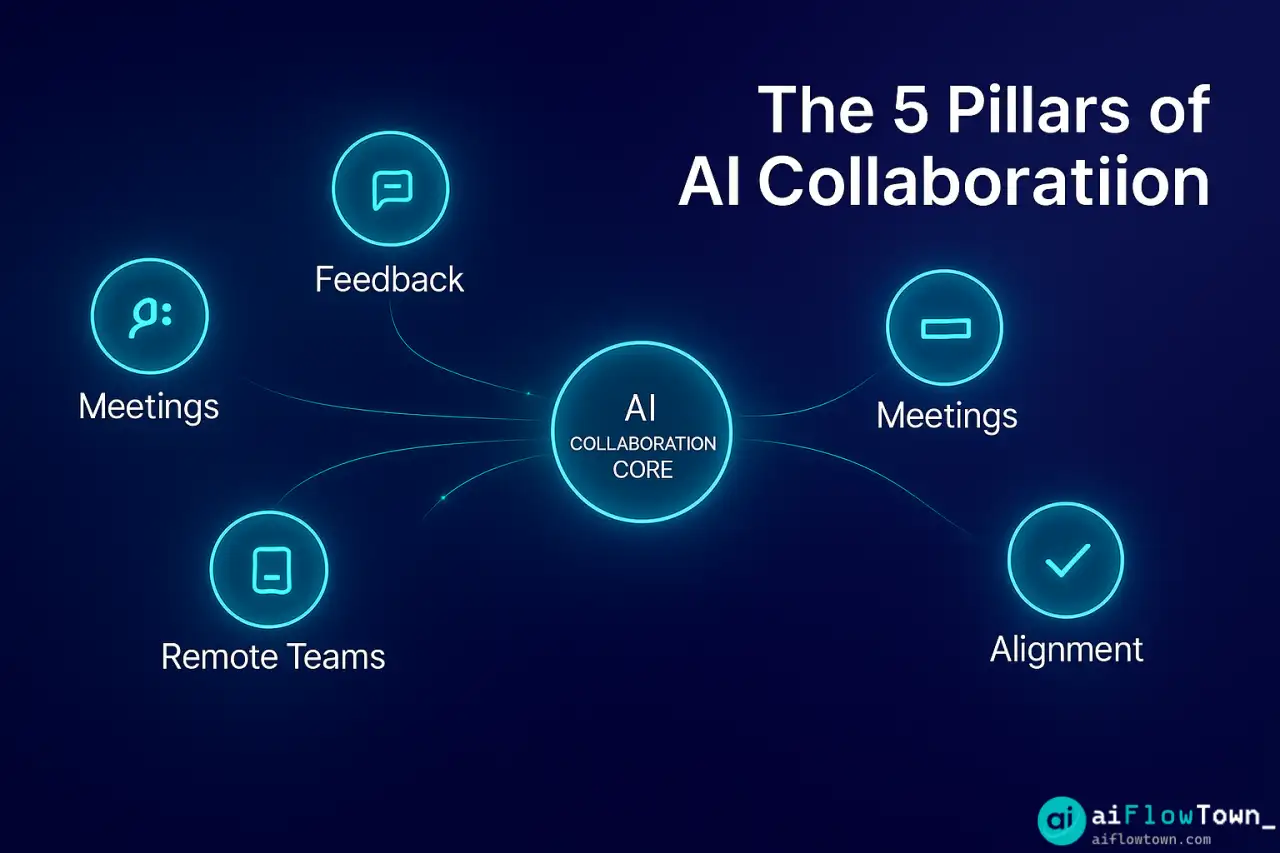
Category 4: Remote Team Coordination (Prompts 19-24)
Prompt 19: Async Status Update Template
"Design async status update system:

Team size: [Number of people]
Time zones: [Range across team]
Update frequency: [Daily / Weekly]

Create template that captures:
- What I accomplished
- What I'm working on today
- Blockers (if any)
- What I need from others

Make it: 2 minutes to write, 1 minute to read, actionable."
Prompt 20: Timezone-Friendly Scheduling
"Find meeting time that doesn't torture anyone:

Team locations: [List cities/timezones]
Meeting duration: [How long]
Frequency: [How often]

Suggest:
- Time that's reasonable for everyone (9am-6pm local)
- Rotation if no perfect time (alternate who's inconvenienced)
- Async alternative if synchronous is painful

Nobody should have 6am or 10pm meetings regularly."
Prompt 21: Remote Work Visibility
"Make remote work visible without micromanaging:

Team structure: [Roles and projects]
Current problem: [What's invisible/unclear]

Design system that shows:
- What everyone's working on (without constant check-ins)
- Progress on shared goals
- Who's blocked and on what
- Capacity and workload

Principles: Transparency without surveillance, trust but verify."
Prompt 22: Building Remote Culture
"Improve remote team connection:

Team size: [Number]
Current vibe: [Transactional / Siloed / Disconnected]
Constraints: [Budget, time zones, tools]

Suggest activities that:
- Don't feel forced or cheesy
- Work across time zones
- Build actual relationships
- Respect people's time

Mix async and sync options."
Prompt 23: Onboarding Remote Team Member
"Design remote onboarding for new hire:

Role: [Position]
Team: [Who they'll work with]
Start date: [When]

Create 30-day plan:
- Week 1: Who to meet, what to learn, setup tasks
- Week 2-4: Progressive responsibility ramp
- Key relationships to build
- How to get unstuck when remote
- Success metrics (how we'll know onboarding worked)

Make them productive AND integrated."
Prompt 24: Remote Team Health Check
"Assess remote team health:

Observations:
- Response times: [Patterns]
- Meeting attendance: [Engagement]
- Communication tone: [Changes]
- Deliverable quality: [Trends]

Diagnose:
- Are people burned out, disengaged, or thriving?
- What's working well?
- What needs intervention?
- Specific actions to improve team health

Be honest—sugarcoating helps nobody."
For coordinating distributed teams, check coordinate remote teams using ai tools approaches at AI productivity prompts.
Category 5: Strategic Alignment (Prompts 25-30)
Prompt 25: Goal Cascade
"Cascade company goals to team level:

Company goal: [High-level objective]
My team's role: [How we contribute]

Break down into:
- Team objectives (our specific targets)
- Individual contributions (what each person does)
- Success metrics (how we measure)
- Dependencies (what we need from others)

Make connection obvious—why our work matters to company goal."
Prompt 26: Priority Alignment Check
"Verify team actually agrees on priorities:

Ask each team member privately:
'What are our top 3 priorities right now?'

Responses: [Paste what each person said]

Analyze alignment:
- Do people agree or are priorities all over?
- Who's working on what wasn't mentioned?
- What's being ignored that should be priority?

Suggest: How to get actually aligned, not just 'we're aligned.'"
Prompt 27: Cross-Team Coordination
"Coordinate with another team:

Our need: [What we need from them]
Their constraints: [Their priorities/capacity]
Timeline: [When we need it]

Draft collaboration proposal:
- What we're asking for (specific)
- Why it matters (to them, not just us)
- What we're offering in return
- Proposed timeline and milestones
- How we'll minimize disruption to their work

Make it easy for them to say yes."
Prompt 28: Retrospective Facilitation
"Design effective retrospective:

Project/sprint completed: [What just finished]
Team size: [Number of people]
Known issues: [Problems people will mention]

Structure retro:
- What went well (celebrate)
- What could improve (without blame)
- What we'll change next time (specific actions)
- What we'll stop doing (permission to quit ineffective practices)

Make psychological safe—focus on system, not people."
Prompt 29: Team Capacity Planning
"Realistic capacity assessment:

Team members: [List with roles]
Upcoming work: [Projects/tasks on horizon]
Current commitments: [What's in progress]

Calculate:
- Actual available hours (account for meetings, interruptions)
- Work required (with realistic estimates)
- Gap between capacity and demand
- What to deprioritize or where to get help

Push back on impossible commitments with data."
Prompt 30: Team Vision Exercise
"Create compelling team vision:

Team: [Name and purpose]
Current state: [Where we are]
Ideal future: [Where we want to be]

Craft vision that:
- Inspires without being cheesy
- Specific enough to guide decisions
- Ambitious but achievable
- Addresses "why our work matters"

Test: Would this vision motivate you to do hard work?"
❓ FAQ
Can AI prompts really improve team dynamics?
Prompts don’t fix toxic teams, but they provide structure for healthy teams to communicate better. Think of them as frameworks that make implicit expectations explicit. They work when team wants to improve but lacks tools to do so effectively.
Should I share these prompts with my team?
Yes, especially meeting and feedback prompts. When whole team uses same structure, communication improves. Create shared doc of team-specific prompts. Adjust language to match your team culture—formality level varies by organization.
⚖️ How do I balance AI suggestions with human judgment?
AI provides structure and perspective, you provide context and relationship knowledge. Use AI output as starting point, always edit for your specific situation and people involved. If AI suggestion feels off, trust your instinct—you know your team better.
Which prompts have biggest impact?
Meeting facilitation prompts (#1-6) show fastest ROI—better meetings improve everything. Feedback prompts (#7-12) build long-term team capability. Conflict prompts (#13-18) prevent bigger problems. Start with meeting prompts, expand from there based on needs.
How often should I use these prompts?
Meeting prompts: before every important meeting. Feedback prompts: when needed, not scheduled. Conflict prompts: early when you sense tension. Alignment prompts: quarterly minimum. Don’t overuse—prompts are tools, not rituals. Use when they add value.
Final Thoughts
These 30 teamwork prompts don’t replace good management or healthy team culture. They provide structure that makes coordination easier and communication clearer. Teams fail not because people are incompetent, but because implicit expectations, unstated assumptions, and poor communication compound into dysfunction.
Start with 3 prompts this week: one for meeting clarity (#1), one for feedback (#7), and one for conflict prevention (#16). Use them, adjust language to match your team, see what improves. Build your team’s prompt library gradually based on actual coordination problems you encounter.
The best teams aren’t those with the most talent—they’re those with the clearest communication. AI prompts give you frameworks for that clarity without requiring everyone to become expert facilitators overnight. Structure enables collaboration; these prompts provide that structure.
Next: Want more productivity improvements? Explore our complete collection of 100+ AI prompts for work and life to transform how you operate across all areas.
⚠️ Reminder: Even the smartest tools / AI can miss small details or make mistakes. Always double-check your work before presenting or publishing it - a quick review can save hours later.