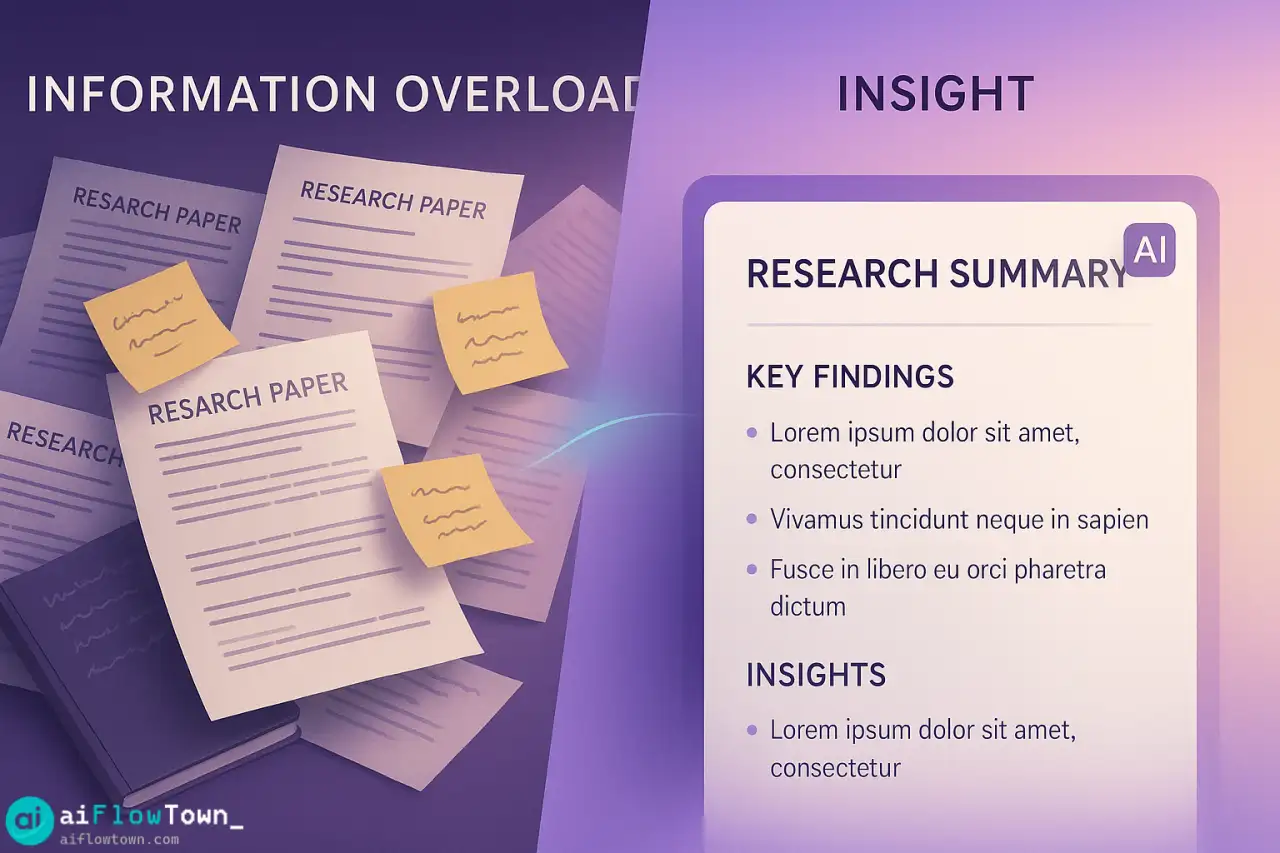
When Research Becomes Information Overload
Your boss asks you to research AI applications in healthcare. You search Google Scholar. Thousands of results. You pick 10 papers that look relevant. Each is 20-40 pages of dense academic language. By page 3 of the first paper, you’re lost in methodology sections and statistical analysis you barely understand.
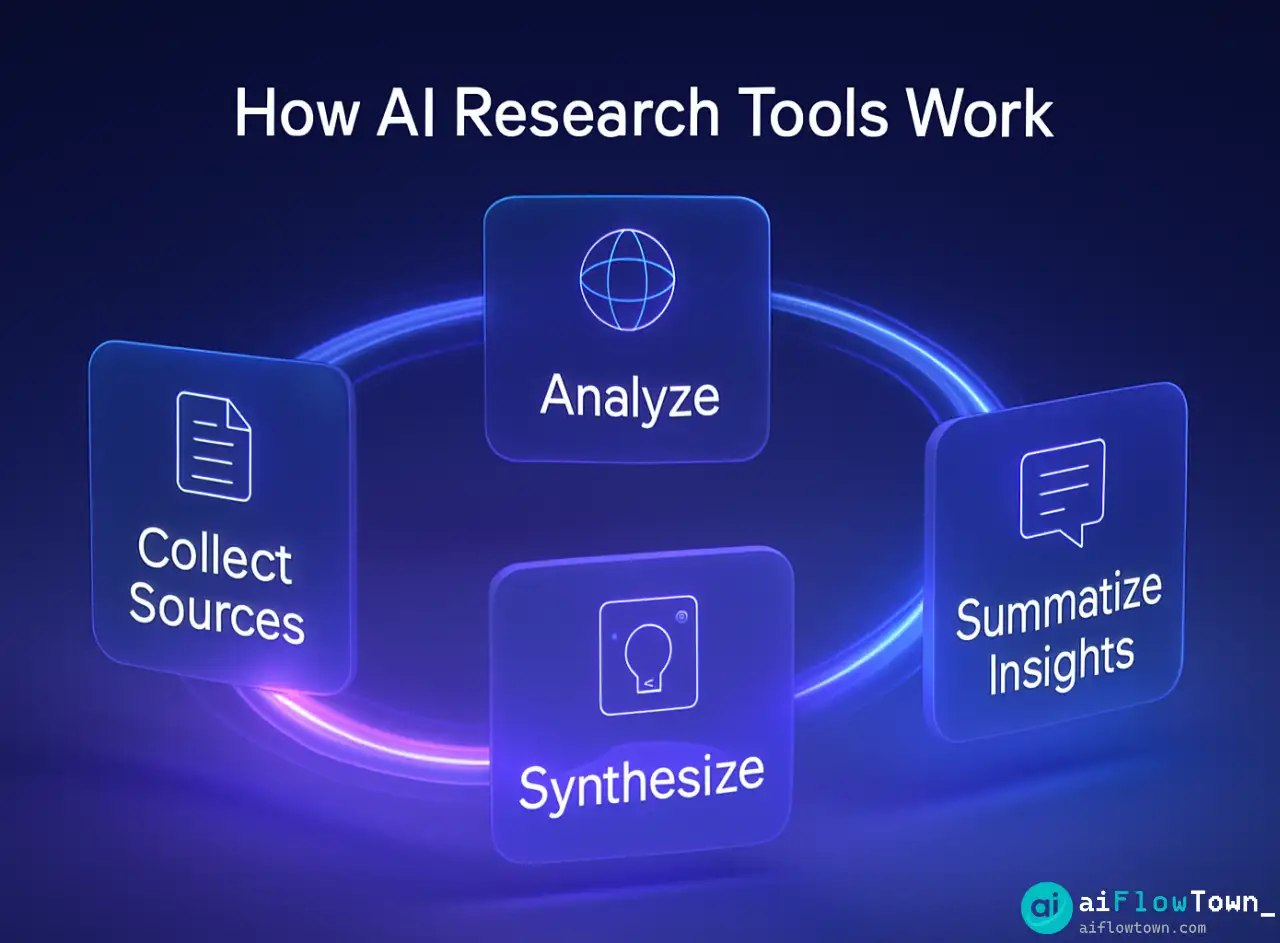
You soldier on. Skim abstracts. Highlight sections that seem important. Take notes. Five hours later, you have a messy document full of disconnected facts and you still can’t confidently answer the original question. This is why ai research tools matter—they handle the heavy lifting of reading, understanding, and connecting information across sources.
The problem isn’t that you can’t read. It’s that modern research requires processing volumes of information that exceed human capacity for speed and synthesis. AI doesn’t get tired, doesn’t lose focus, and can identify patterns across 50 papers faster than you can read one abstract.
Why Traditional Research Methods Break Down
The Volume Problem
Comprehensive research on any topic requires reading dozens of sources. Each source has its own structure, terminology, and conclusions. Keeping all this organized in your head while identifying common themes? Nearly impossible. By the time you reach source 15, you’ve forgotten key details from source 3.
The Depth vs Breadth Trade-Off
Do you read 5 sources deeply or 50 sources superficially? Deep reading misses breadth. Superficial skimming misses nuance. You need both, but time forces you to choose. AI eliminates this trade-off by reading everything deeply while maintaining the breadth.
The Jargon Barrier
Academic papers are written for experts, not general audiences. Technical terms, assumed background knowledge, and complex explanations create walls between you and the information you need. This is where ai tools to simplify complex research become essential—they translate expert language into understandable insights.
The AI Research Tool Landscape
Not all AI research tools work the same way. Here’s what exists and what each does best.
| Tool | Best For | Key Feature |
|---|---|---|
| Elicit | Academic papers | Answers questions across studies |
| Consensus | Scientific research | Evidence-based summaries |
| Perplexity AI | General research | Sourced answers with citations |
| ChatGPT with plugins | Flexible research | Custom prompts and analysis |
| Semantic Scholar | Literature review | Paper recommendations |
Each tool has strengths. Choose based on your research type and helps compare research papers with ai tools efficiently. For more tools, visit best AI productivity tools.
The AI Research Workflow
Here’s how to actually use AI for research that produces usable results.
Step 1: Frame Your Research Question
Don’t start with “research AI in healthcare.” Too broad. AI works best with specific questions:
Vague: "What's the impact of AI on healthcare?"

Specific: "How effective are AI diagnostic tools compared to traditional methods for detecting early-stage cancer? Focus on studies from the past 3 years with sample sizes over 1000."
Specific questions produce specific, useful answers. Vague questions produce vague summaries that don’t help decision-making.
Step 2: Use AI to Find Relevant Sources
Instead of manually searching and filtering, ask AI to identify the most relevant papers:
“Find the 10 most cited recent studies on AI cancer diagnostics. For each, provide: publication year, sample size, key finding, and limitation. Rank by study quality.”
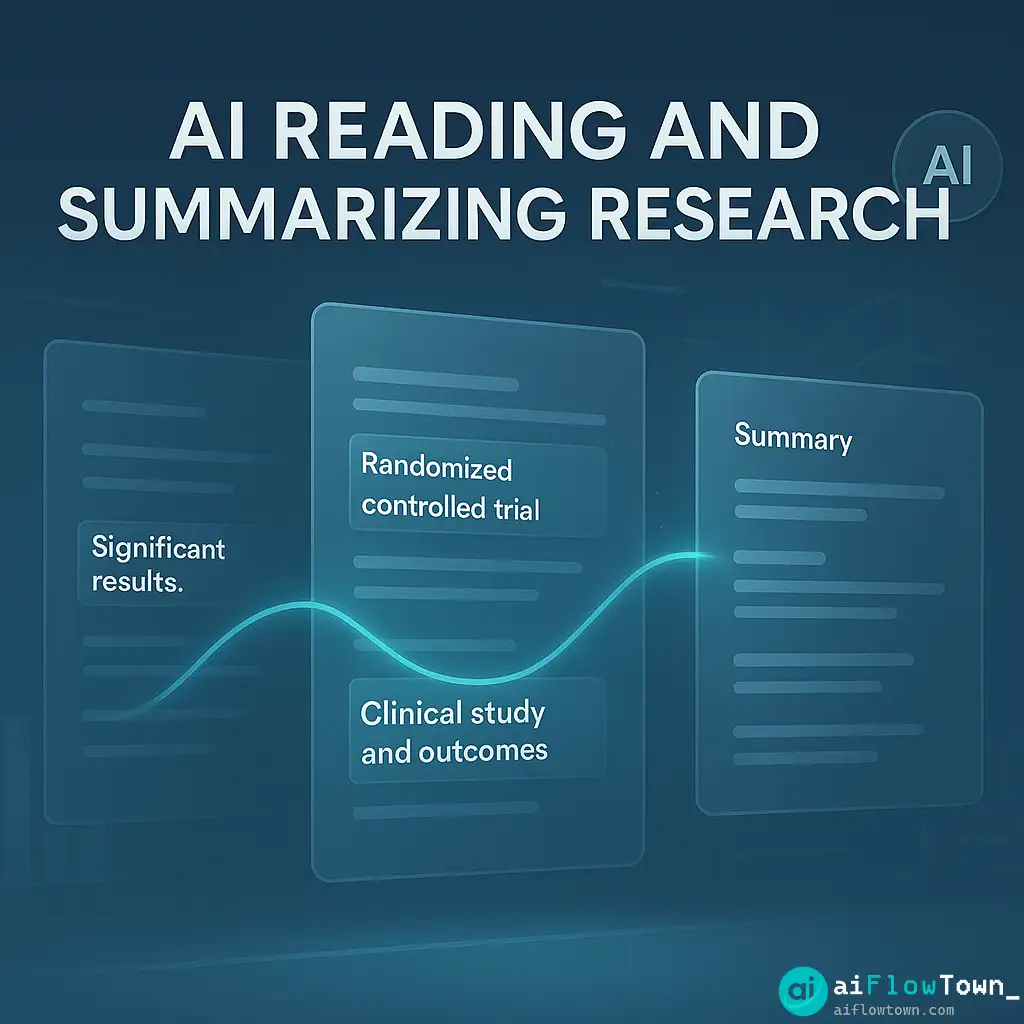
AI scans thousands of papers and returns the signal without the noise. You get curated recommendations instead of drowning in search results and enables automate literature review using ai software effectively.
Step 3: Deep Analysis of Key Sources
Once you have your top sources, AI can analyze them deeply:
"I've uploaded 5 research papers on AI diagnostics. For each paper:

1. Summarize the methodology in plain language
2. Identify the key finding
3. Note any limitations or biases
4. Compare the conclusion to the other 4 papers

Then provide a synthesis: What consensus exists? Where do findings conflict? What gaps remain?"
This prompt gets you a comprehensive analysis that would take days manually. AI handles it in minutes using smart research summarization with ai platforms approach. Learn more at AI workflow examples.
Step 4: Extract Actionable Insights
Research isn’t valuable until it informs decisions. Final prompt should focus on application:
"Based on this research synthesis, answer:

1. Should our company invest in AI diagnostic tools? Why or why not?
2. What are the top 3 risks to consider?
3. What implementation timeline do the studies suggest is realistic?
4. What's missing from current research that we should investigate further?

Format as an executive brief under 500 words."
AI transforms research into actionable recommendations. That’s what stakeholders actually need—not raw data, but “what should we do about this?”
Real Example: Research Task Transformation
The Traditional Approach
⏰ Day 1: Found and downloaded 12 papers (2 hours)
⏰ Day 2: Read papers, took notes (6 hours)
⏰ Day 3: Organized notes, tried to synthesize (4 hours)
⏰ Day 4: Wrote summary report (3 hours)
Total: 15 hours over 4 days. Result: A 5-page report with good information but unclear recommendations.
The AI-Assisted Approach
Same research question, different method:
Asked Elicit: “What are the current accuracy rates and limitations of voice AI in mobile apps?” (5 minutes)
Got summarized findings from 20+ papers with citations (instant)
Used ChatGPT to analyze conflicts in findings (10 minutes)
Prompted for implementation recommendations (5 minutes)
Edited and refined the output (30 minutes)
Total: 50 minutes. Result: A focused 2-page brief with clear, evidence-based recommendations using analyze academic content with ai research assistants effectively.
The Quality Difference
AI approach wasn’t just faster—it was better. Why?
✅ Covered more sources (20 vs 12)
✅ Identified consensus and conflicts Sarah missed
✅ Maintained objectivity without confirmation bias
✅ Structured findings for decision-making, not just information dump
Advanced Research Techniques
Comparative Analysis Across Studies
“These three papers reach different conclusions about X. Analyze: Do they use different methodologies? Different sample populations? Different time periods? What explains the discrepancy?”
– Conflict Resolution Prompt –
Gap Identification
"Based on these 15 papers on remote work productivity:

1. What demographics are underrepresented in the research?
2. What time periods lack data?
3. What methodologies haven't been tried?
4. What questions remain unanswered?

Suggest 3 research directions that would add value to this field."
This is valuable for academic researchers or companies deciding where to invest in original research. Explore more at productivity flow hacks.
Plain Language Translation
"This abstract uses technical terminology. Rewrite it for:

1. A high school student (simple explanations)
2. A business executive (focus on implications)
3. A general audience (conversational tone)

Keep each version under 150 words."
Now the research becomes accessible to different stakeholders without losing accuracy.
Common Mistakes When Using AI for Research
The biggest mistake is treating AI output as gospel without verification. AI can hallucinate citations, misinterpret findings, or miss important nuances. Always verify key claims and check that cited sources actually say what AI claims they say.
Not Checking Citations
AI sometimes invents plausible-sounding citations that don’t exist. Before you present research, verify that papers cited are real and say what AI claims. Spot-check at minimum the most important citations supporting your conclusions.
Skipping the Critical Thinking
AI synthesizes information but doesn’t understand your specific context, constraints, or stakeholder concerns. You still need to interpret findings through your domain expertise. AI provides raw intelligence; you provide strategic judgment.
Over-Relying on Summaries
For truly critical decisions, read the original key papers yourself even if AI summarized them. AI might miss a crucial caveat or limitation that changes the interpretation. Use AI to filter and prioritize, but verify important findings personally.
❓ FAQ
Can AI access paywalled research papers?
Most AI tools can’t access paywalled content directly. You’ll need institutional access or purchase papers individually. Some tools like Elicit work with open-access repositories. For paywalled papers, you can upload PDFs to ChatGPT or similar tools for analysis.
Is using AI for academic research considered cheating?
Using AI to find and summarize sources is like using Google or a library database—it’s a research tool. However, presenting AI-written text as your own analysis is problematic. Use AI for processing information, but add your own critical thinking and analysis.
⚠️ How accurate are AI research summaries?
Generally 85-95% accurate for straightforward factual content. Accuracy drops with complex topics, nuanced arguments, or highly technical material. Always verify critical claims by checking original sources. Never trust a single summary for important decisions.
Are these tools expensive?
Many have free tiers sufficient for occasional research. Perplexity AI is free. Elicit has a limited free plan. ChatGPT Plus is $20/month. For heavy research use, paid plans typically run $20-30/month. Compare that to hours of manual research time.
Can AI help with ongoing research tracking?
Yes. Tools like Semantic Scholar can alert you to new papers in your research area. You can set up automated summaries of new publications matching your criteria. AI turns passive research into active monitoring of your field.
Final Thoughts
Complex research doesn’t have to take weeks. With the right ai research tools, you can process more information faster while maintaining or improving quality. The goal isn’t to eliminate human judgment—it’s to eliminate the tedious parts so you can focus on analysis, synthesis, and decision-making.
Next time you face a research project, start with AI. Define your question clearly, use AI to filter sources and extract insights, then apply your expertise to interpret findings. You’ll complete in hours what used to take days, with better coverage and clearer conclusions.
The information you need exists. AI just helps you find it without drowning in everything you don’t need.
⚠️ Reminder: Even the smartest tools / AI can miss small details or make mistakes. Always double-check your work before presenting or publishing it - a quick review can save hours later.