The Complete AI SEO Workflow
You want to build an SEO site. Traditional approach: spend weeks brainstorming, researching keywords, planning content calendars, writing articles, editing, optimizing. It’s exhausting before you even launch. AI changes this equation—but not in the way most people think.
The promise: “AI will build your entire site while you sleep!” The reality: AI is an incredibly powerful assistant that handles repetitive intellectual work at scale, but you still make the critical decisions that determine success or failure. Using seo with ai tools isn’t about automation—it’s about amplification.
Let me show you the actual workflow that works, including which AI does what, and where you still need to be hands-on.
Phase 1: Planning with ChatGPT
ChatGPT excels at the strategic planning phase. It’s your brainstorming partner and research assistant rolled into one.
Niche Research and Validation
Start with a broad interest. Feed ChatGPT:
"I'm interested in [topic]. Help me identify 5 profitable sub-niches with:
- Moderate competition (not dominated by major brands)
- Clear monetization potential
- Existing search demand
- Underserved audience needs

For each, explain why it has potential and what the main competition looks like."
ChatGPT processes this in seconds, giving you validated directions to explore. You’re not starting from zero—you’re evaluating AI-generated options based on your goals and capabilities.
Domain and Brand Development
Once you pick a niche, ChatGPT helps with naming:
“Generate 20 domain name ideas for a site about [niche]. Requirements: brandable, memorable, available .com, SEO-friendly but not keyword-stuffed. Include reasoning for top 5 suggestions.”
You’ll get options you’d never think of alone. But you make the final call—AI suggests, you decide based on gut feel and brand vision. For more strategic planning, explore AI workflow strategies.
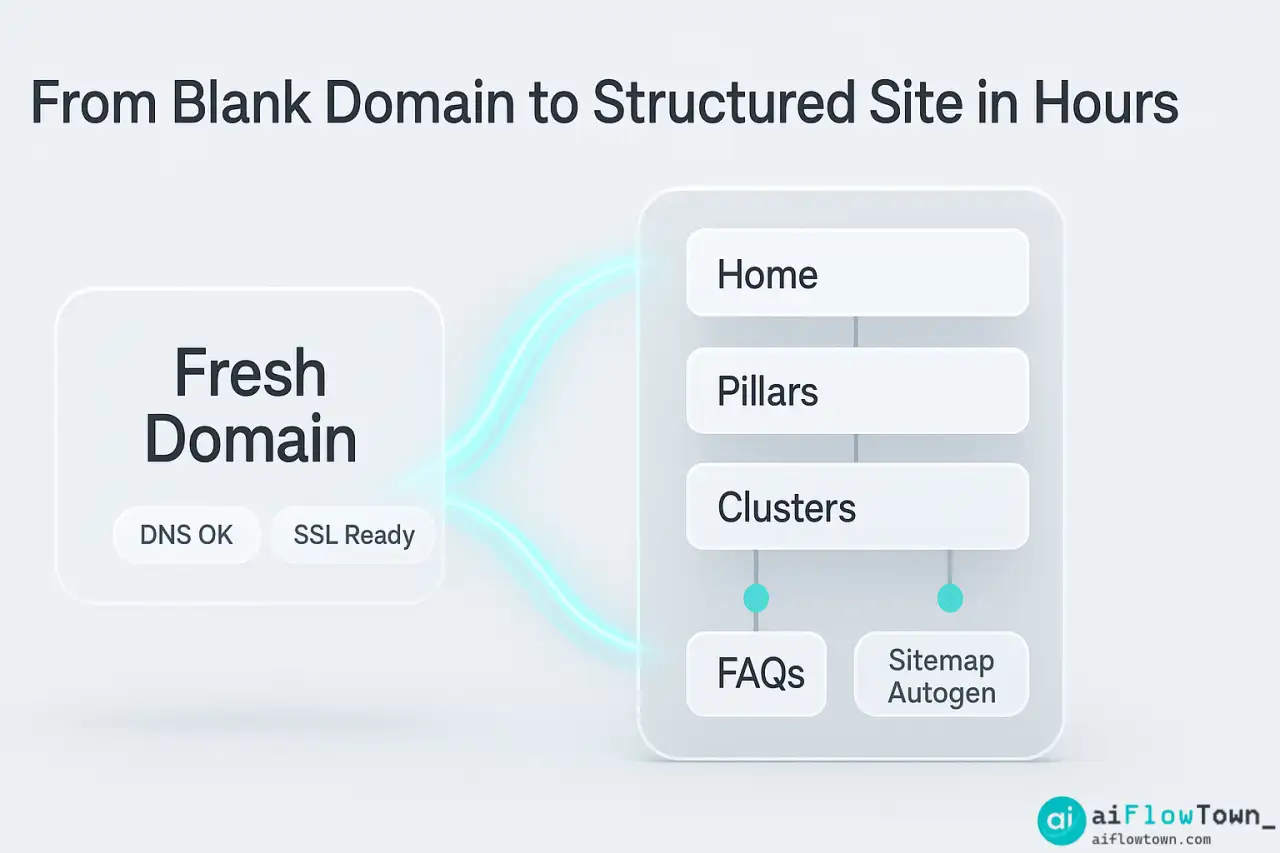
Site Structure and Content Planning
This is where ChatGPT really shines. Ask it to design your entire site architecture:
"Create a complete site structure for [domain/niche] including:

1. Homepage sections and messaging
2. Main category pages (5-7 categories)
3. 50 blog post ideas organized by category
4. Internal linking strategy
5. Conversion funnel from discovery to monetization

Format as a hierarchical outline with brief descriptions."
In 3 minutes, you have a comprehensive site blueprint that would take days to develop manually. This is how to build seo site with chatgpt and claude efficiently—divide tasks based on each AI’s strengths.
Phase 2: Content Creation with Claude
Now comes the critical part: writing content. This is where most AI SEO projects fail because people use the wrong tool.
Why Claude for Content Writing
After testing all major AI models at the $20/month pro tier—ChatGPT Plus, Claude Pro, and Gemini Advanced—here’s the honest comparison for ai content writing comparison for seo:
| AI Model | Strengths | Fatal Flaws for SEO |
|---|---|---|
| Claude Pro | Natural writing voice, actually writes requested length, follows instructions precisely, deep research capability | Sometimes too cautious, occasionally over-explains |
| ChatGPT Plus | Great for planning and ideation, fast responses, good at short content | Won’t write long content—claims 4200 words but delivers 1000, inconsistent instruction following |
| Gemini Advanced | Strong at data analysis | Rambling, unnecessarily verbose, poor instruction adherence, weakest writing quality |
For SEO content that needs to be 1500-2500 words, well-structured, and naturally written, Claude is the only model that consistently delivers. When you say “write 2000 words,” Claude writes 2000 words. ChatGPT writes 800 and calls it done. Gemini writes 3000 words of fluff.
The Claude Content Workflow
Take your content plan from ChatGPT and feed individual topics to Claude:
"Write a comprehensive SEO article on [topic].

Requirements:
- 1800-2000 words
- Target keyword: [keyword]
- Tone: conversational but authoritative
- Include: practical examples, actionable steps, real-world context
- Structure: intro, 5-7 H2 sections with H3 subsections, conclusion
- Avoid: generic advice, obvious statements, unnecessary fluff

Write for someone who needs actual help, not someone looking for basic definitions."
Claude produces articles that read human. The voice is natural. The length matches what you requested. It follows your structural requirements without deviation. This is what makes it the best ai tools for complete seo workflow when combined with ChatGPT’s planning.
Learn more about effective prompting at AI productivity prompts.
Why Instruction Following Matters
Here’s a real example. Same prompt to all three AIs: “Write a 2000-word guide on email productivity. Include 3 real-world examples. Use conversational tone.”
- ChatGPT result: 987 words, generic advice, one weak example, tone was corporate
- Gemini result: 2847 words, rambling, examples buried in unnecessary context, inconsistent tone
- Claude result: 2043 words, three detailed examples, conversational throughout, matched the brief exactly
When you’re writing 50+ articles for an SEO site, this consistency gap compounds. Claude respects your requirements. The others… improvise.
Phase 3: The Supporting Cast
Content and planning are handled, but a complete site needs more.
Visual Content with AI
For images, Canva’s AI features or Midjourney work well for featured images and graphics. ChatGPT’s DALL-E can generate quick visuals for blog posts. None of these are perfect—you’ll spend time adjusting and refining—but they’re faster than stock photo hunting or hiring designers for every image.
Theme and Design
ChatGPT can recommend WordPress themes based on your niche and requirements. It can even help customize CSS if you need tweaks. But picking the final theme? That’s your eye for design, not AI’s.
Keyword Research
ChatGPT provides solid keyword suggestions, but it’s working from training data, not real-time search volumes. Use AI to generate keyword ideas, then validate them with actual SEO tools like Ahrefs or SEMrush. AI gives you directions; tools give you data.
For more comprehensive strategies, visit best AI productivity tools.
The Automation Dream vs Reality
Now let’s talk about the tempting idea: fully automated content publishing.
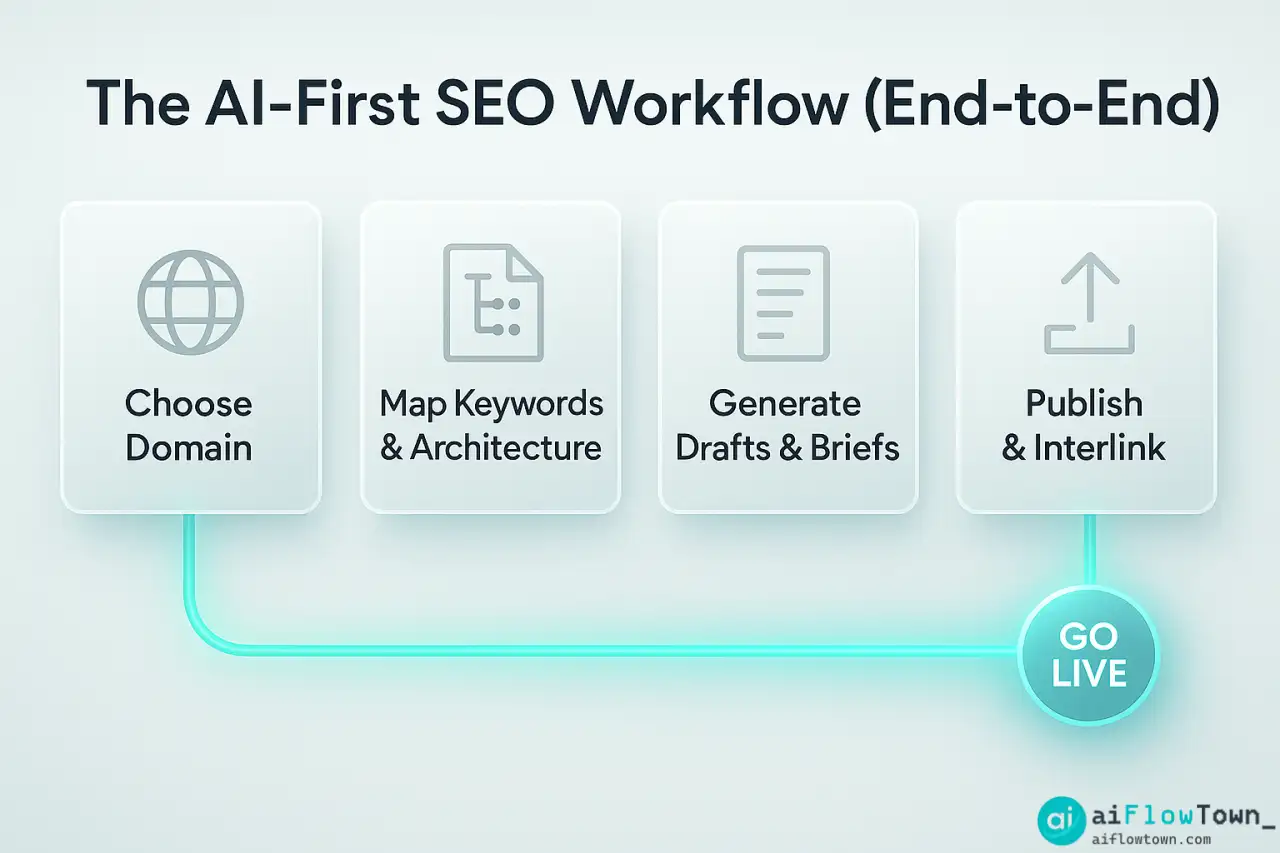
The Theoretical Workflow
You could theoretically:
- Generate content plan in ChatGPT → Export to Google Sheets
- Feed topics to Claude → Generate articles
- Create images in Canva → Store in cloud folder
- Use n8n to pull everything together → Auto-publish to WordPress
Zero manual intervention. Content flows from idea to published post automatically. This is the dream people sell in “AI SEO automation” courses.
Why It Doesn’t Actually Work
Here’s what happens in reality:
The automated content will be consistent, on-brand, and 100% mediocre. Every article will be “fine.” None will be great. You’ll have a site full of content that reads like it was written by AI—because it was, with no human refinement.
The problems that emerge:
- ❌ AI occasionally misinterprets prompts—you need to catch this
- ❌ Some topics need specific examples only you know about
- ❌ Tone drift happens—AI is consistent but not perfectly consistent
- ❌ Internal linking requires strategic thinking, not just automation
- ❌ Image selection needs judgment about what actually fits
A fully automated site won’t be terrible. It just won’t be good enough to stand out in competitive niches. And SEO is nothing if not competitive.
The 80/20 Rule of AI SEO
Here’s the honest assessment after building multiple AI-assisted sites:
What AI Does Brilliantly
AI handles the bulk work that used to consume 80% of your time:
- ✅ Research and idea generation
- ✅ First draft writing
- ✅ Content structuring
- ✅ Basic SEO optimization
- ✅ Brainstorming and problem-solving
This compression of timeline is real. What took months now takes weeks. That’s transformative.
What Needs Your Touch
The remaining 20% determines whether your site is forgettable or remarkable:
- Strategic decisions—niche selection, positioning, monetization
- Quality control—catching AI mistakes, improving weak sections
- Voice refinement—making content sound uniquely yours
- Example selection—adding specific, relevant cases AI can’t know about
- User experience—navigation, internal linking, conversion optimization
You can’t outsource judgment. AI assists; you decide.
The Real Comparison: ChatGPT vs Claude vs Gemini
Since you’re spending $20/month on these tools, here’s the honest breakdown for chatgpt vs claude for seo content creation:
| Use Case | ChatGPT | Claude | Gemini |
|---|---|---|---|
| Strategic planning | ✅ Excellent | ⚪ Good | ⚪ Fair |
| Brainstorming ideas | ✅ Excellent | ✅ Excellent | ⚪ Good |
| Keyword research | ✅ Excellent | ⚪ Good | ⚪ Fair |
| Short-form content | ✅ Excellent | ✅ Excellent | ⚪ Fair |
| Problem solving | ✅ Excellent | ⚪ Good | ⚪ Fair |
| Long-form writing | ❌ Weak | ✅ Excellent | ❌ Poor |
| Hit word count target | ❌ Claims 4200, delivers 1000 | ✅ Accurate | ❌ Over-writes unnecessarily |
| Consistent tone | ⚪ Good | ✅ Excellent | ❌ Inconsistent |
| Follow instructions | ⚪ Sometimes | ✅ Precisely | ❌ Often ignores |
| Deep research | ⚪ Good | ✅ Excellent | ⚪ Fair |
The Verdict for SEO Content
ChatGPT: Perfect for planning, strategizing, and generating ideas. Use it to map your entire site, research niches, brainstorm topics, and create meta descriptions. Don’t rely on it for articles over 1000 words.
Claude: The workhorse for actual content creation. When you need 1500-2500 word articles that maintain quality throughout, follow your brief exactly, and sound naturally human—Claude is the only reliable choice among the three.
Gemini: Skip it for SEO content work. The rambling, verbose output and poor instruction adherence make it frustrating. Better suited for data analysis tasks than content creation.
Building Your Actual Workflow
Here’s the process that actually works for creating quality AI-assisted SEO sites:
- Week 1: Strategy with ChatGPT — Niche research, domain selection, site structure, content plan
- Week 2-3: Content Creation with Claude — Write core articles, refine based on your edits, develop brand voice
- Week 4: Integration and Polish — Manual review, internal linking, image selection, final SEO optimization
- Ongoing: Hybrid Approach — AI generates drafts, you refine to perfection before publishing
This is automate seo workflow using ai platforms done right—AI accelerates, you elevate.
❓ FAQ
Is $20/month for each AI worth it for SEO?
If you’re building a serious site, yes. Free tiers have usage limits that become annoying fast. $40/month total (ChatGPT Plus + Claude Pro) pays for itself if it saves you 5 hours of work—which it will, repeatedly.
Can I just use ChatGPT for everything?
You can try, but your content will suffer. ChatGPT is brilliant for planning but weak for long-form writing. Articles will be shorter than requested and less detailed than needed. Use the right tool for each job.
How much editing do AI articles really need?
With good prompts, Claude articles need 15-20% editing—adding specific examples, adjusting tone in places, improving transitions. ChatGPT articles need 40%+ editing. Gemini articles need so much work you might as well start over.
⏱️ How long does it take to build a site this way?
A 30-article site that would take 3 months manually can be done in 4-6 weeks with AI assistance. But rushing to 2 weeks produces mediocre results. Quality still needs time, just less of it.
Will Google penalize AI-generated content?
Google cares about quality and usefulness, not how content was created. AI-assisted content that’s well-edited, provides value, and serves users performs fine. Fully automated, unedited AI content with no human oversight typically doesn’t rank well—not because it’s AI, but because it’s mediocre.
Final Thoughts
Building an SEO site with AI tools like ChatGPT and Claude is absolutely viable—if you understand their roles and limitations. ChatGPT plans, Claude writes, and you provide the judgment that turns good into great. The seo with ai tools approach isn’t about replacement—it’s about augmentation.
You’ll compress timelines dramatically. You’ll produce more content faster. You’ll have AI handle the repetitive intellectual work. But you’ll still need to care about quality, make strategic decisions, and refine AI output before publishing.
The sites that win aren’t the ones that automate everything. They’re the ones that use AI to do more work, better work, in less time—with human judgment applied at every critical decision point.
That combination? That’s the real power of AI for SEO.
⚠️ Reminder: Even the smartest tools / AI can miss small details or make mistakes. Always double-check your work before presenting or publishing it - a quick review can save hours later.