The New AI Wave Arriving in 2025
Last year was about experimentation. 2025 is about integration — tools that no longer just assist, but anticipate. The newest wave of new AI tools 2025 doesn’t shout “artificial”; it feels intuitive, human, almost invisible. You don’t ask them what to do; they already know what you mean.
This isn’t hype. It’s the quiet maturity of an industry finally syncing with real workflows — creative, analytical, operational. Let’s explore ten innovations that are quietly reshaping how we think and work this year.
Automation Reimagined
1. FlowPilot — Autonomous Workflow Engine
FlowPilot links your apps and calendar but goes further: it predicts tasks you’ll likely do next. Trained on your routine patterns, it suggests priorities before meetings end. It’s the evolution of Zapier with predictive scheduling built in.
It’s not just automating; it’s orchestrating. The AI doesn’t wait for a trigger — it creates one.
2. MindSync — Context-Aware Assistant
Imagine ChatGPT fused with your entire workspace. MindSync plugs into Notion, Slack, and Drive, so it remembers context — your tone, current projects, even deadlines. You can say, “Summarize my week,” and it gathers everything, then adds recommendations. It’s personal memory meets professional assistant — an automation layer that learns empathy.
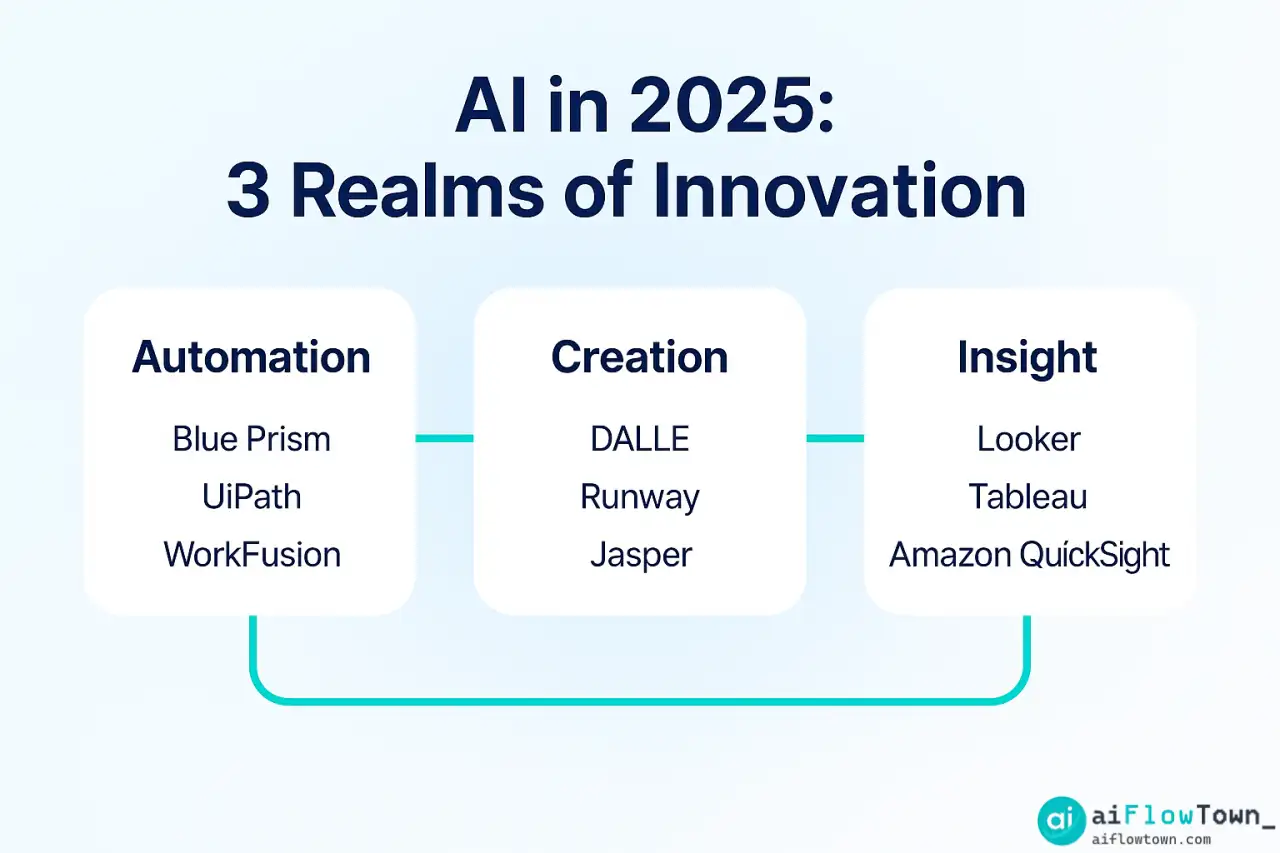
Creation Without Friction
3. CopyForge — Adaptive Writing Partner
CopyForge rewrites, adjusts tone, and keeps brand consistency across documents. Feed it your style guide once; it self-updates. Marketing teams love it because it learns nuance instead of rules. Pair it with ideas from AI Productivity Prompts to unlock infinite creative angles in less time.
4. Visionary — Image-to-Story Generator
This tool flips image generation on its head: upload an image, and it writes the story, caption, or campaign copy inspired by it. It’s built for creators who think visually first. Perfect for branding teams who start with emotion, not keywords.
5. Harmonia — Sound That Adapts to Focus
Harmonia listens to your work rhythm. It modulates ambient audio in real time, matching your heart rate and typing pace. Based on studies in cognitive psychology, it helps sustain flow. When you slow down, so does the soundtrack. It’s the meeting point of neuroscience and sound design — productivity that sings.
Insight and Intelligence
6. DeepSummit — AI for Strategic Decisions
DeepSummit ingests analytics dashboards, financial sheets, and project notes. It doesn’t just summarize — it explains *why* trends shift. Designed for executives, it produces human-readable strategy briefs complete with confidence levels. It bridges what you see and what it means — turning data into decisions.
7. PersonaGraph — Behavioral Analytics for Teams
PersonaGraph uses anonymized behavioral cues from communication tools to detect burnout or disengagement patterns. It offers managers early nudges, like “Your design team’s async chat dropped 30 % this week.” It’s analytics with empathy — measuring mood, not just metrics.
8. QueryLoop — Conversational Data Explorer
Think ChatGPT for databases. Ask “Which campaigns had best ROI in Q4?” — it parses SQL, runs the query, and visualizes answers instantly. It’s what analysts always wanted: less coding, more insight.
Creativity and Expression
9. DreamScript — Multimodal Story Engine
DreamScript merges text, visuals, and sound into one creative timeline. Writers draft a scene; AI generates matching visuals and sound design. It’s a production studio compressed into a single interface. Independent creators now prototype films or ads in a morning instead of a month.
10. NeuraMuse — Thinking Partner for Artists
NeuraMuse works like a digital muse. It analyzes your portfolio, identifies recurring themes, and prompts you with creative opposites — pushing you beyond comfort zones. It’s less about answers, more about better questions.
For many, this is the tool that revives creative curiosity that routine tends to dull.
Why These Tools Matter
AI Has Become Emotional Infrastructure
We used to install tools; now we inhabit them. The emotional tone of your workflow — calm, chaotic, curious — is increasingly shaped by the AI layers underneath. These new platforms understand pacing and personality, not just productivity.
They Reflect the “Less App, More Flow” Trend
2025’s innovation isn’t about adding apps — it’s about merging them. Many tools here already embed automation or reasoning inside your existing systems. That’s the big shift: invisible integration.
How to Choose Wisely
Every shiny launch promises transformation. But here’s a grounded approach:
- ✅ Pick one automation tool — maybe FlowPilot or MindSync.
- ✅ Add one creative ally — CopyForge or DreamScript.
- ✅ Keep one insight engine — DeepSummit or QueryLoop.
That’s enough to feel 80 % of the benefits without drowning in novelty.
Where to Start Building Your Stack
If this feels overwhelming, revisit AI Automation Tools for Beginners for integration fundamentals. Once you grasp triggers, data flow, and context, adding any of these tools becomes plug-and-play. Combine that foundation with the systems from The 15 Best AI Productivity Tools to design a stack that feels personal, not generic.
The Road Ahead: 2026 and Beyond
Expect AI to move from “assistant” to “collaborator.” Next-gen tools will sense cognitive load, suggest breaks, or rewrite priorities based on energy levels. The future of work isn’t robotic — it’s responsive. And that’s where this 2025 lineup is quietly leading us.
Final Thoughts
The best new AI tools 2025 don’t feel futuristic — they feel natural. They’re the missing pieces between intention and execution, between thought and action. Use them not to chase speed, but to craft clarity. When tech adapts to human rhythm, productivity stops being a race and starts being a flow state you can live inside.
❓ FAQ
Which AI tools should I try first?
Start with one from each category: FlowPilot for automation, CopyForge for creation, and DeepSummit for insight. Small stack, big payoff.
Are these tools free or paid?
Most offer free tiers with limited credits. Paid plans unlock advanced context awareness and integrations.
⚙️ Can I integrate them with my current setup?
Yes. Most connect through APIs or Zapier. If you’re new, see AI Automation Tools for Beginners for step-by-step examples.
What trends define AI in 2025?
Context-awareness, emotional design, and invisible integration — AI that blends into your workflow instead of adding friction.
Where can I explore more AI workflows?
Browse AI Productivity Prompts for guided systems that connect these tools into everyday routines.
⚠️ Reminder: Even the smartest tools / AI can miss small details or make mistakes. Always double-check your work before presenting or publishing it - a quick review can save hours later.