The Psychology Behind AI-Powered Productivity
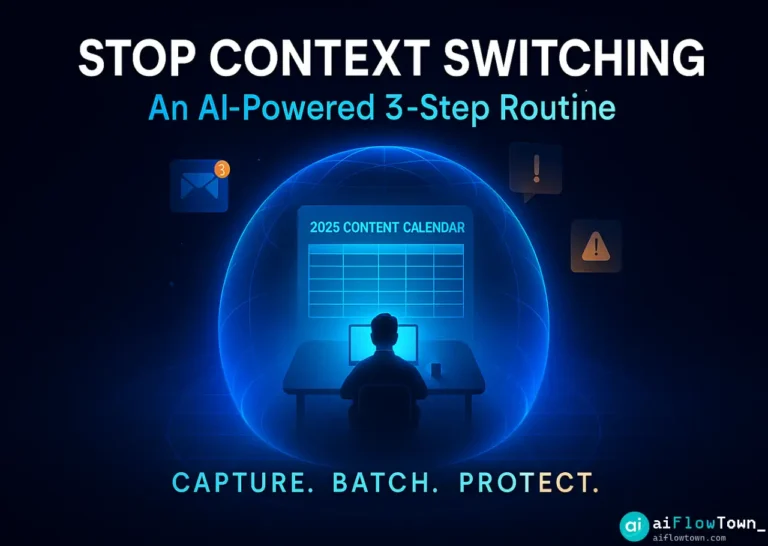
For years, we’ve chased “more” — more tools, more hacks, more apps. But the psychology of true productivity isn’t about addition. It’s about subtraction — removing friction, distraction, and noise. That’s why AI productivity psychology matters: it’s not about AI doing work for us, but about AI freeing the brain to do what only humans can — think, decide, create.
Understanding how AI affects motivation, focus, and flow can help you design a smarter way to work — one that’s built for the human mind, not against it.
The Science Behind Focus and Flow
AI Reduces Cognitive Load
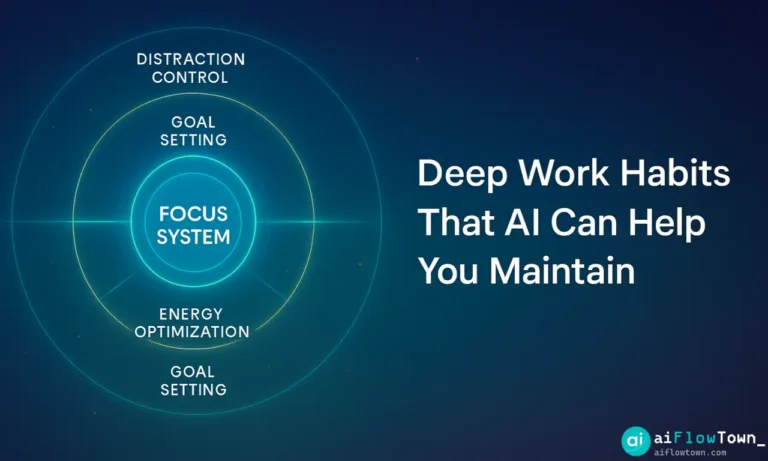
Your brain can only hold so much at once. Every decision — even small ones — drains mental energy. AI tools reduce “decision fatigue” by automating routine steps: scheduling, formatting, summarizing. When the brain has fewer micro-decisions, it can channel effort into meaningful work.
Think of it as offloading mental RAM. Instead of juggling 10 small tabs in your head, AI closes them quietly in the background.
How Automation Triggers Flow
Flow — that deep state where time disappears — happens when challenge meets skill, and distractions vanish. AI helps reach flow by removing uncertainty and clutter. You’re not interrupted by “What’s next?” or “Where did I save that file?”
When AI clears the runway, focus takes off naturally.
Motivation: Working With Your Brain’s Reward System
Small Wins, Big Dopamine
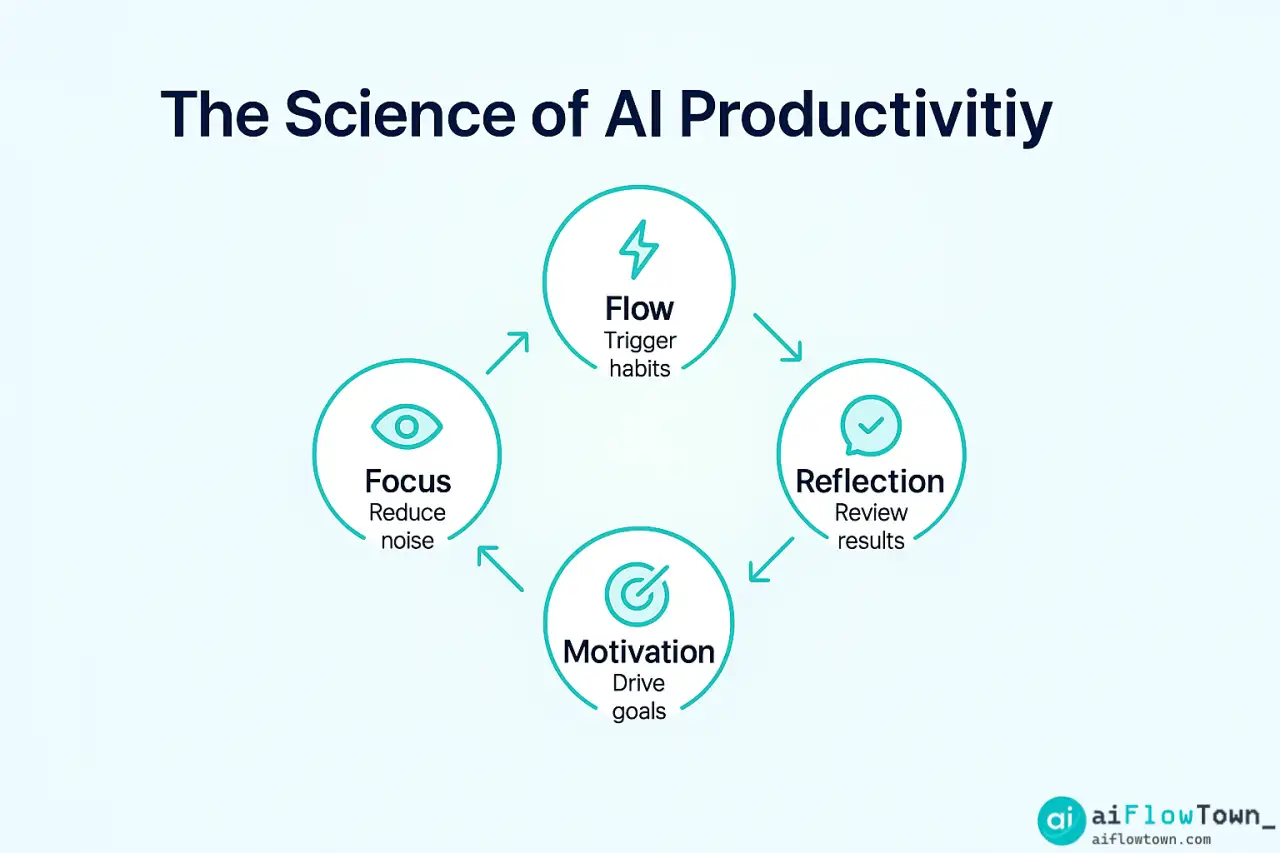
Our brains crave closure — finishing a task, checking a box, sending a reply. AI systems multiply these micro-rewards. When tools like Notion AI or Reclaim schedule, summarize, or visualize progress, they give visible wins faster, keeping momentum alive. This loop of action → feedback → reward builds motivation automatically. You feel progress before burnout sets in.
The Paradox of Effortless Work
Humans value effort — we equate sweat with worth. But neuroscience shows our reward circuits light up more when tasks feel *effortless yet meaningful.* AI removes friction, not challenge. The goal isn’t laziness; it’s clarity.
The best AI productivity tools don’t make you idle — they make you intentional.
Emotional Clarity and Mental Space
AI as a Cognitive Mirror
AI reflects your thinking back at you. When you ask ChatGPT to “summarize this mess of notes,” it’s doing what psychologists call *externalization* — turning internal chaos into visible order. This mirrors journaling or therapy, where articulation equals understanding.
That’s why many users describe AI as “mental decluttering.” It organizes thoughts so emotions can settle.
When Less Anxiety Means More Insight
Research shows anxiety drops when structure rises. Predictability reduces cortisol. When AI automates routine reporting or planning, uncertainty fades — leaving emotional bandwidth for creativity.
Calm minds innovate faster.
Why We Resist Automation (and How to Reframe It)
Paradoxically, people resist the very systems that could free them. Psychologists call this *control aversion*: the fear of losing agency. The key is reframing AI not as “replacement,” but as “reallocation.” You’re not giving up control; you’re reallocating it from repetitive logic to high-value judgment.
Trust Comes from Transparency
We trust what we understand. The more transparent AI tools become — showing what they automate and why — the easier it is for our minds to relax into delegation. A visible system builds confidence, not anxiety.
The Flow Framework: Human + Machine
Productivity happens at the intersection of emotion and system. When you blend motivation, focus, and feedback, you create flow — a self-sustaining rhythm of effort and reward. AI strengthens that rhythm by automating the *setup* and *cleanup* phases of work, leaving you in the creative middle.
| Human Strength | AI Support | Result |
|---|---|---|
| Creativity & Judgment | Pattern recognition | Clearer decisions |
| Focus & Attention | Task scheduling | Deep work sessions |
| Reflection | Summaries & insights | Faster learning loops |
Designing for Flow
Structure your day like a composer writes music: movement, pause, resolution. AI tools handle rhythm (notifications, priorities), but you conduct emotion. A system like Notion + Reclaim can create rhythm; your curiosity adds melody.
The Neuroscience of “Enough”
Why Our Brains Crave Boundaries
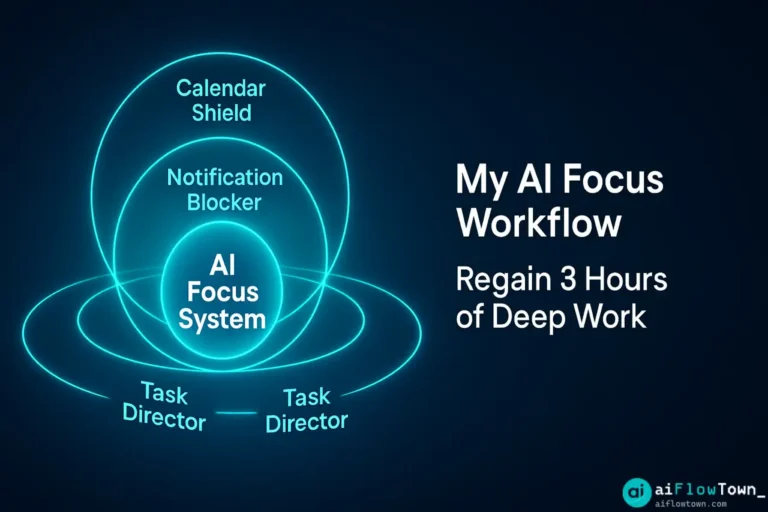
Without limits, productivity becomes punishment. Neuroscience shows focus improves when time is framed — sprints, breaks, closures. AI scheduling apps like Motion or Reclaim naturally build these frames, turning chaos into cadence.
Completion and Closure
Each “done” signal gives a dopamine hit, but endless tasks numb it. AI visual dashboards show visible progress — a psychological anchor of achievement. The brain stops chasing infinite checkboxes and starts celebrating real closure.
From Efficiency to Meaning
The Shift from Output to Insight
Efficiency is mechanical. Meaning is human. AI frees you from mechanical repetition so your energy moves upstream — into judgment, empathy, design, leadership. That’s why the most powerful impact of AI productivity psychology isn’t speed — it’s satisfaction.
Reflection Creates Learning Loops
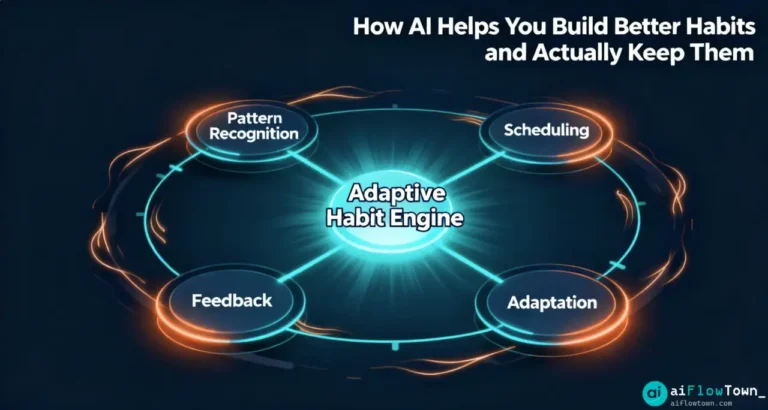
When AI tools summarize your week or generate reports, they’re not just saving time — they’re building awareness. Reviewing insights turns automation into adaptation. The system evolves with you.
Building Your AI-Mindset Loop
To make AI truly effective, pair it with mindful habits. Here’s a framework to merge cognitive science with daily flow:
- ✅ Morning: Let AI plan the day — removes start friction.
- ✅ Midday: Use AI for summaries — maintains context clarity.
- ✅ Evening: Reflect with AI — closes mental loops.
This cycle mirrors how the brain operates best: prepare → act → reflect → rest.
Embracing AI as a Mirror, Not a Machine
When you see AI as a mirror of cognition, you stop fearing it. It’s not competition — it’s amplification. The smarter your system, the calmer your mind. Productivity stops being a hustle and becomes a dialogue between human insight and machine precision.
Final Thoughts
At its heart, productivity isn’t about apps or hacks — it’s about alignment. Understanding the psychology of productivity means working with your brain’s biology, not against it. AI simply magnifies that alignment, letting clarity replace chaos. When automation meets awareness, work feels less like survival and more like rhythm. That’s the real promise of AI productivity psychology.
Want to design your own flow system? Explore AI Productivity Prompts and learn how to align technology with human behavior.
❓ FAQ
What does AI have to do with psychology?
AI tools change how our brains handle focus, decision-making, and motivation. They offload cognitive load and create mental clarity for deeper thinking.
⚙️ How can I apply this in daily life?
Use AI for repetitive setup — scheduling, summarizing, structuring — then use your brain for creative and judgment-based tasks.
Why does automation make me feel calmer?
Predictability reduces anxiety. When AI handles uncertainty, your brain relaxes, improving focus and emotional regulation.
What’s the risk of over-automating?
Too much automation can create dependency. Keep a human-in-the-loop mindset — AI assists; you decide.
Where can I find more tools that fit this mindset?
Check The 15 Best AI Productivity Tools for apps that align technology with human psychology.
⚠️ Reminder: Even the smartest tools / AI can miss small details or make mistakes. Always double-check your work before presenting or publishing it - a quick review can save hours later.