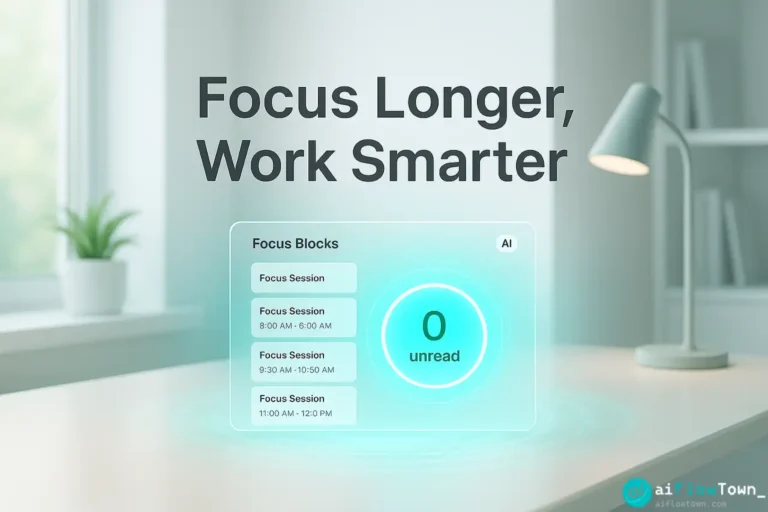
Focus Longer with an AI-Assisted Workflow
In today’s hyper-connected world, the ability to concentrate deeply for extended periods is becoming increasingly rare—and increasingly valuable. Constant notifications, context switching, and the allure of digital distractions create persistent “focus leaks” that sabotage our productivity and deep work efforts. While discipline is crucial, what if technology itself could help us combat these challenges? This guide explores how you can achieve deep focus with AI, transforming artificial intelligence from a potential distraction into a powerful ally for concentration.
We’ll delve into practical strategies and tools that leverage AI to help you structure your time, minimize interruptions, understand your focus patterns, and build sustainable concentration habits. Forget generic advice; we’re focusing on actionable techniques like AI time blocking techniques, intelligent session tracking, and AI-driven insights. Learn how to focus longer using AI and reclaim your most valuable cognitive resource.
This isn’t about replacing human effort but augmenting it, using AI to create the optimal environment for your brain to do its best work.
Part 1: The Modern Focus Crisis – Understanding “Focus Leaks”
Before we introduce AI solutions, let’s diagnose the problem. Why is sustained focus so difficult?
- ❌ Digital Distractions: Constant pings from email, Slack, social media, and news alerts fragment our attention. Our brains become conditioned to expect interruption.
- ❌ Context Switching: Jumping between different tasks, projects, and applications incurs a significant cognitive cost, making it hard to regain deep concentration on any single item.
- ❌ Lack of Structure: Without clearly defined work blocks and boundaries, especially in remote settings, lower-priority tasks and external demands easily encroach on focused work time.
- ❌ Decision Fatigue: Constantly deciding what to work on next drains mental energy that could be used for the work itself.
- ❌ Poor Energy Management: Working against our natural ultradian rhythms (cycles of high and low energy) leads to burnout and reduced concentration capacity.
These “focus leaks” prevent us from entering the state of deep work necessary for high-value creative, strategic, or technical tasks. AI can help plug these leaks by automating structure and providing insights.
Sustained focus isn’t just about willpower; it’s about designing an environment and workflow that minimizes friction and protects your attention. AI can be a powerful architect for this design.
Part 2: AI Time Blocking – Your Intelligent Schedule Architect
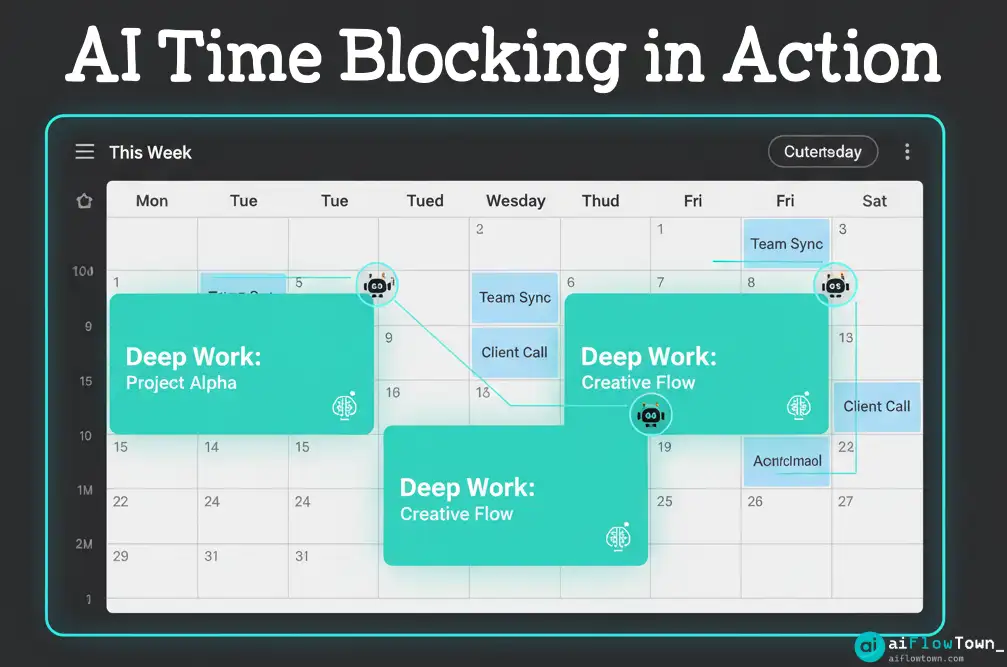
One of the most effective ways to use focus with AI is through intelligent time blocking. Unlike manual time blocking where you meticulously plan every hour, AI time blocking tools act as dynamic schedulers.
How it Works:
- Define Your Priorities: You tell the AI tool (like Reclaim AI or Motion) your tasks, projects, deadlines, estimated durations, and recurring habits (e.g., exercise, lunch).
- Set Your Constraints: You define your working hours, meeting preferences, and crucially, you can designate specific types of tasks or times as high-priority “Focus Work” or “Deep Work.”
- AI Optimizes: The AI algorithm analyzes your existing calendar commitments and intelligently schedules flexible time blocks for your tasks and habits, prioritizing the high-focus work and fitting other items around it.
- Dynamic Rescheduling: If an unexpected meeting request comes in, the AI automatically reschedules lower-priority blocks, ensuring your focus time is defended as much as possible.
Benefits for Focus:
- Automated Structure: Creates the necessary structure for deep work without the manual planning overhead.
- Proactive Defense: The AI actively protects your designated focus blocks from being booked over.
- Reduced Decision Fatigue: Eliminates the constant need to decide “What should I work on now?”
Using an AI calendar scheduling tool is a foundational step towards building a more focused workday.
Part 3: Tracking Your Focus Sessions – Gaining Awareness with AI
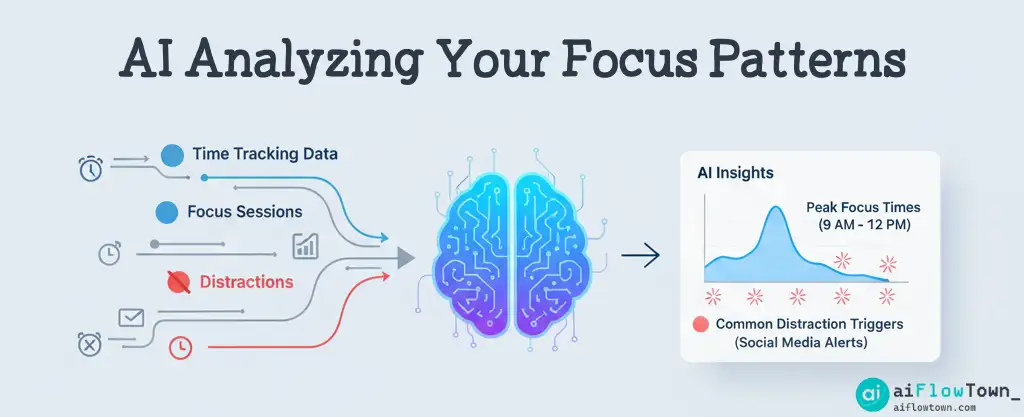
Knowing when you are most focused is key to optimizing your schedule. While AI time blockers schedule focus time, other tools can help you track its effectiveness.
How it Works:
- Time Tracking Tools: Use automatic time trackers (like RescueTime, Timely, Clockify) or manual timers (like Toggl Track, Pomodoro timers) to log how you spend your time, specifically noting periods intended for focused work versus administrative tasks, meetings, or breaks.
- AI Analysis (Potential): While direct track focus sessions with ai analysis within these tools is still evolving, you can export your time tracking data (often as a CSV) and use an AI model like ChatGPT for analysis.
Example AI Analysis Prompt:
Act as a productivity analyst. Here is my time tracking data for the past week, showing activity/task and duration. Analyze this data to identify:
1.  Total time spent in designated "Deep Work" or "Focus" sessions vs. other categories (Meetings, Admin, Breaks).
2.  Which days and times of day show the highest concentration of focused work?
3.  Are there recurring patterns of distraction or context switching (e.g., frequent short bursts of email checking during focus blocks)?
4.  Based on this data, suggest one specific adjustment I could make to my schedule or habits next week to increase my total deep work time.

Data:
[Paste your exported time tracking data here - e.g., CSV format or a clear list]
Benefits for Focus:
- Objective Awareness: Provides data-driven insights into your actual focus patterns versus your perceived ones.
- Identify Peak Times: Helps you pinpoint your most naturally productive hours for scheduling critical deep work.
- Spot Distraction Triggers: Reveals recurring times or activities that consistently derail your focus.
This AI productivity analysis turns raw time data into actionable insights for improving concentration.
Part 4: AI as a Focus Assistant – Real-Time Support
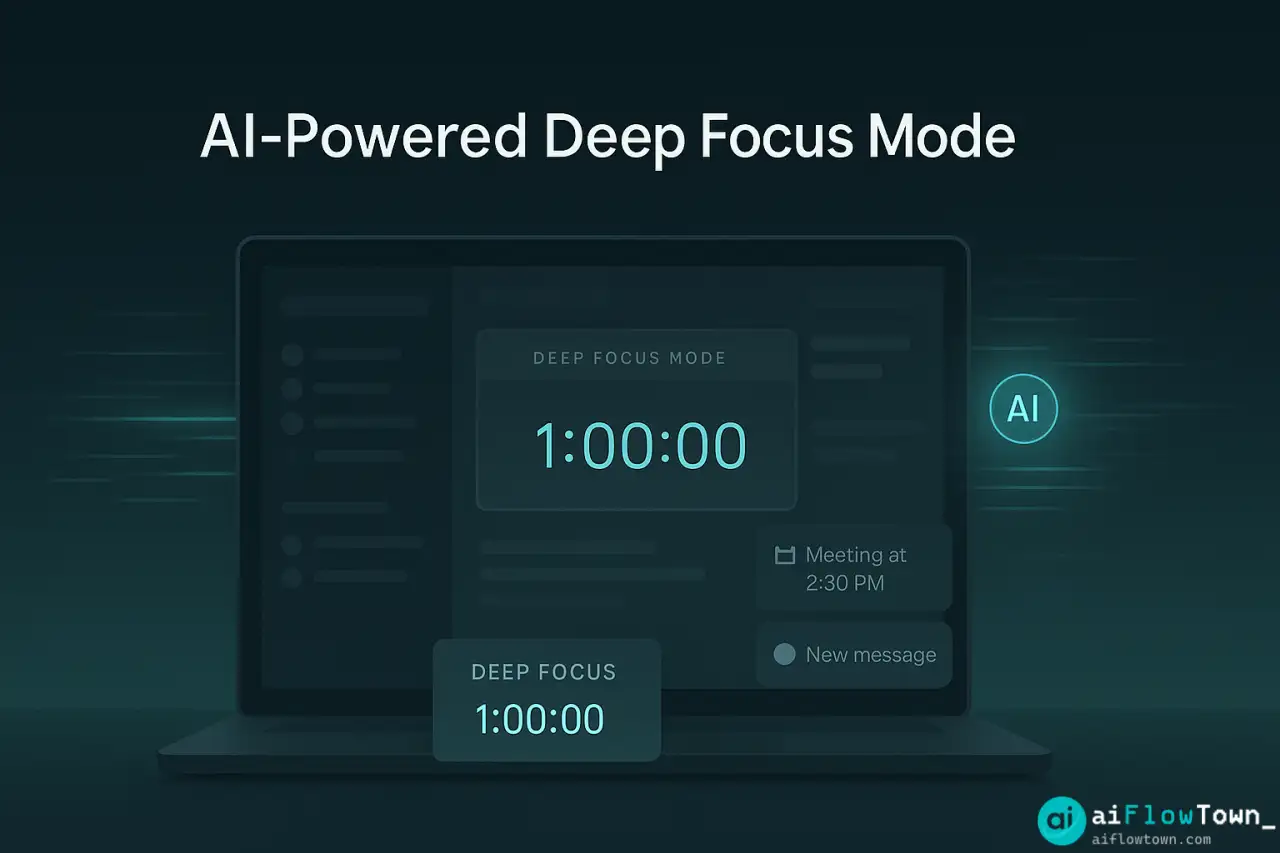
Beyond scheduling and analysis, AI can act as an active assistant during your work sessions.
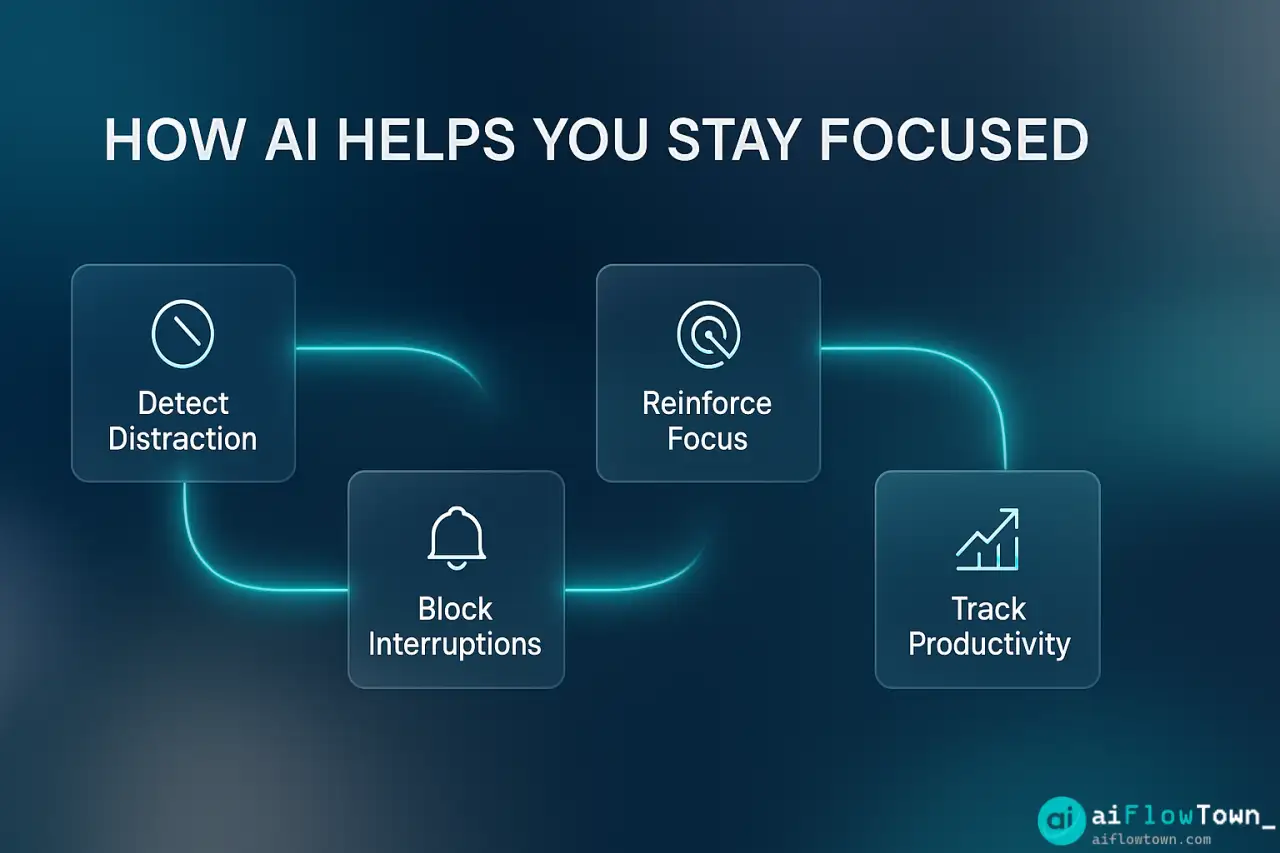
1. AI-Powered Distraction Blocking (Emerging Tools)
Some tools are beginning to use AI to go beyond simple website blocking. They might learn your work patterns and proactively suggest blocking distracting sites during focus times, or even use AI to summarize notifications instead of showing the full disruptive alert.
2. AI for Breaking Down Tasks (Reducing Overwhelm)
As mentioned in our guide to 5-minute AI routines, using a prompt to break down a large, intimidating task into tiny first steps is a powerful way to overcome procrastination, a major enemy of focus.
Task Breakdown Prompt:
Act as a focus coach. I need to work on "[Large Task Name]" but I'm feeling stuck. Help me identify the single, smallest physical action I can take in the next 5 minutes to start making progress.
3. AI for Summarizing Information Quickly
Research rabbit holes are a common focus killer. Use AI to quickly summarize long articles or documents before diving deep, ensuring the material is relevant and saving you from wasting time on unhelpful tangents.
Quick Summary Prompt:
Summarize the key arguments and conclusion of the following text in 3 bullet points: [Paste Text Here]
These techniques use AI as an ai focus assistant to manage overwhelm and maintain momentum.
Comparing Focus Strategies: AI vs. Traditional
How do these AI-driven approaches stack up against classic focus techniques?
| Focus Challenge | Traditional Technique | AI-Enhanced Technique | Advantage of AI |
|---|---|---|---|
| Scheduling Focus Time | Manual Time Blocking | AI Time Blocking (Reclaim, Motion) | Automated, dynamic rescheduling, proactive defense. |
| Understanding Focus Patterns | Manual Time Logs & Reflection | Time Tracking + AI Analysis Prompt | Faster, more objective pattern detection. |
| Overcoming Procrastination | “Eat the Frog,” Breaking down tasks manually | AI “Next Action” Prompt | Externalizes the breakdown process, reduces mental friction. |
| Managing Distractions | Turning off notifications, Website Blockers | (Emerging) AI-Powered Blockers, AI Notification Summaries | Potentially more adaptive and less disruptive blocking/filtering. |
| Information Overload (Research) | Skimming, reading abstracts | AI Quick Summary Prompt | Faster synthesis of key points from long texts. |
Part 5: Building Sustainable Focus Habits with AI Support
Technology alone isn’t the answer. Sustainable focus requires building the right habits and routines. AI can assist here too.
- Design Startup/Shutdown Routines: Use prompts to create consistent morning routines that prepare your mind for focus and evening routines that help you disconnect fully. (See prompts in our remote work prompts guide).
- Schedule Regular Breaks: Use AI time blocking habits to automatically schedule short breaks (Pomodoro style) or longer “attention restoration” breaks.
- Weekly Review with AI: Use AI to analyze your week’s accomplishments and challenges (based on calendar data or journal entries) and suggest focus priorities for the next week.

Conclusion: Your AI-Augmented Focus Practice
Achieving deep focus with AI is not about finding a magic app that eliminates all distractions. It’s about strategically using intelligent tools to architect an environment and workflow conducive to concentration. By leveraging AI time blocking techniques to structure your day, tracking tools combined with AI productivity analysis to understand your patterns, and targeted prompts to overcome specific focus challenges like procrastination, you can significantly enhance your ability to focus longer and produce higher-quality work.
Start by identifying your biggest “focus leak.” Is it scheduling? Distractions? Procrastination? Then, choose one AI-driven strategy from this guide to address it. Small, consistent steps, augmented by intelligent technology, are the key to mastering focus in the age of AI. Explore more techniques and tools in our Mindset & Focus category.
❓ FAQ
Can AI ‘really’ help me focus better, or is it just another distraction?
It depends entirely on how you use it. If used reactively and without structure, AI can absolutely be another distraction (“cognitive grazing”). However, if used intentionally and proactively – to set up schedules, analyze patterns, or break down tasks before you start working – it can be a powerful tool for focus by reducing cognitive load and protecting your time.
What are the best AI tools specifically designed for focus?
Dedicated AI “focus” tools are still emerging. Currently, the most effective approach involves combining AI-powered scheduling tools (like Reclaim AI, Motion) with AI analysis (using ChatGPT on time tracking data) and task management support (using ChatGPT for breakdowns/summaries). Tools specifically using AI to block distractions are becoming more common but are less mature.
Do I need paid tools to implement these strategies?
For basic task breakdown and analysis prompts, the free versions of AI models like ChatGPT are sufficient. However, dedicated AI time blocking tools (Reclaim, Motion) typically require paid subscriptions for full functionality. Time tracking tools often have useful free tiers. You can start experimenting with prompts for free before investing in paid scheduling tools.
⚠️ Reminder: Even the smartest tools / AI can miss small details or make mistakes. Always double-check your work before presenting or publishing it - a quick review can save hours later.