Introduction
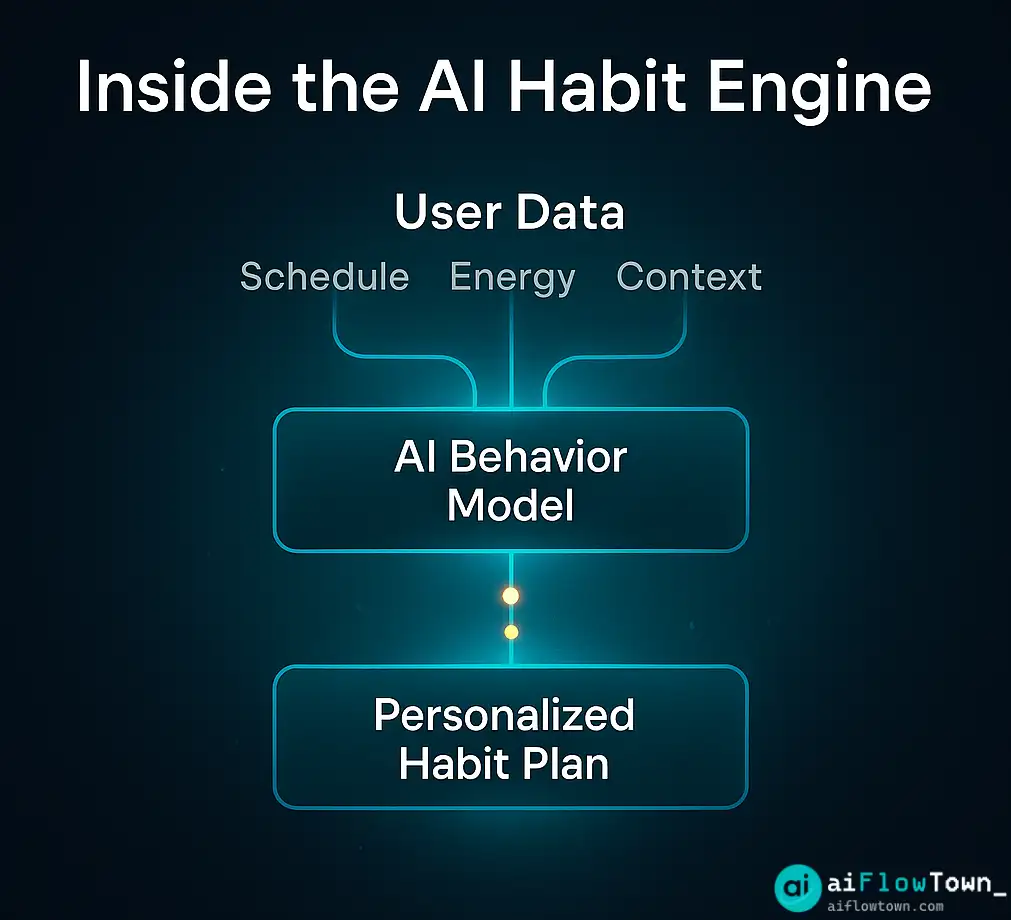
You’ve tried habit tracking before. Downloaded the app, checked boxes for a week, then forgot it existed. The problem wasn’t your willpower—it was the static system. An ai habit tracker changes the game by adapting to your life, not demanding you adapt to it. Here’s how AI makes habit formation actually work.
Why Traditional Habit Tracking Fails
Traditional habit apps treat everyone the same. Do the thing every day at the same time. Miss once, break the streak. Feel guilty, give up.
Real life doesn’t work that way. Some days you’re energized, some days you’re exhausted. Your schedule shifts. Priorities compete. An ai habit tracker understands this and adjusts accordingly.
How AI Makes Habit Tracking Smarter
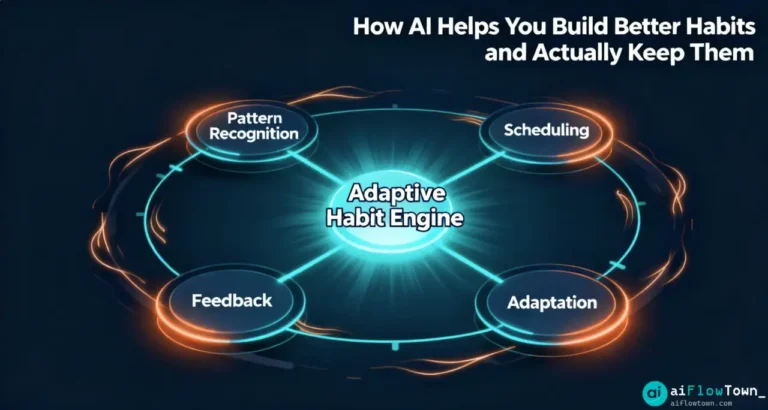
Pattern Recognition
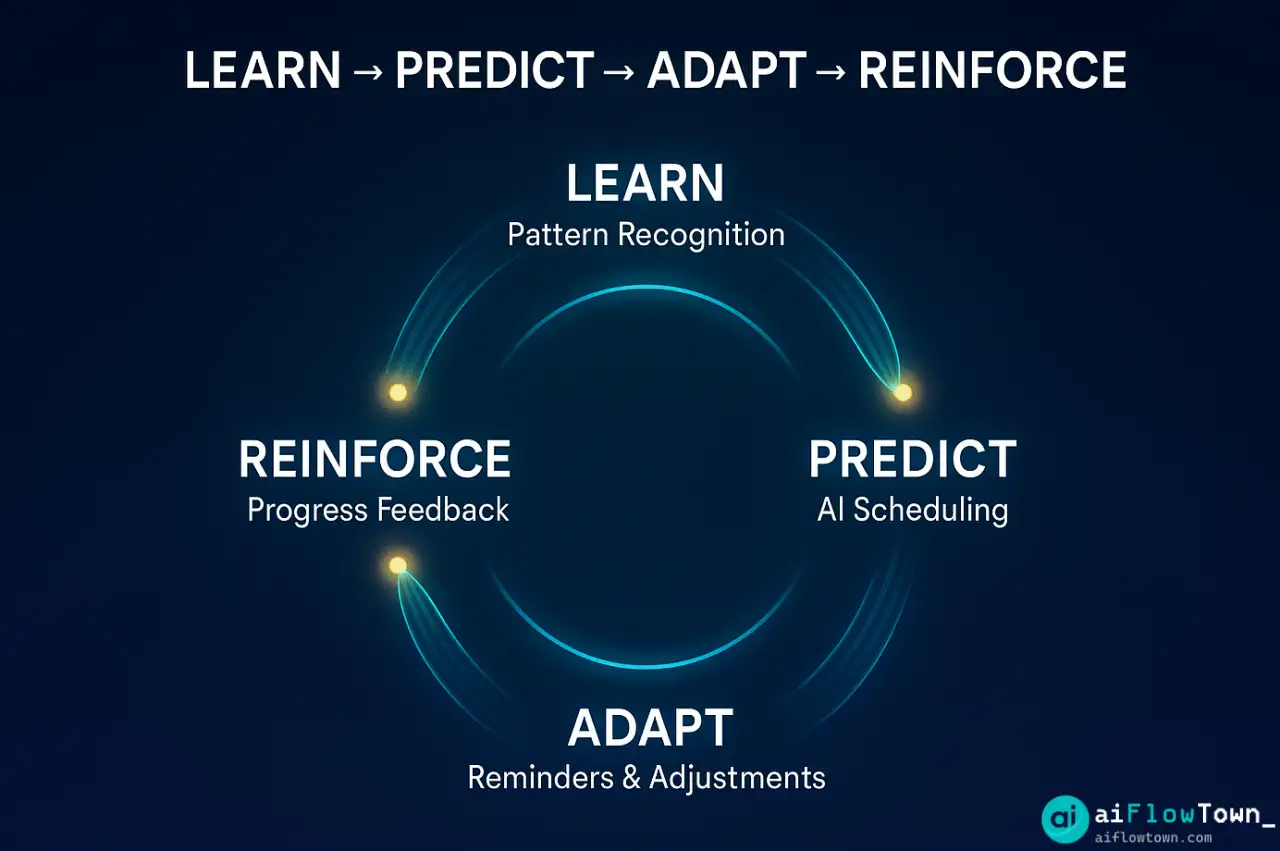
AI analyzes when you succeed and when you fail. It spots patterns you’d miss: you exercise consistently on days with fewer than 3 meetings, or you skip morning routines when you stay up past midnight.
These insights help you set realistic goals instead of aspirational ones that collapse under real-world pressure.
Adaptive Scheduling
Instead of “meditate at 7am daily,” AI suggests: “You’re most consistent with morning habits on Tuesday and Thursday. Try afternoon habits on Monday and Wednesday.”
It finds windows in your actual schedule rather than forcing habits into slots that don’t work.
Context-Aware Reminders
AI reminders aren’t just time-based. They consider your location, calendar, previous activity, and current energy level. “You just finished a 2-hour meeting—good time for a 5-minute stretch habit.”
For more on AI-powered productivity strategies, explore our AI productivity prompts guide.
Predictive Intervention
AI spots when you’re likely to skip a habit and intervenes early. If you usually skip workouts after busy mornings, it suggests shorter alternatives before you’ve even decided to quit.
Best AI Habit Tracking Tools
| Tool | AI Feature | Best For | Price |
|---|---|---|---|
| Habitica | Gamified habit suggestions | People motivated by rewards | Free + $5/mo |
| Streaks | Smart scheduling based on patterns | iPhone users, simple tracking | $5 one-time |
| Way of Life | Trend analysis and insights | Data-driven habit builders | Free + $6/mo |
| Reclaim AI | Calendar-integrated habit scheduling | Busy professionals | Free + $8/mo |
| Coach.me | AI + human coaching hybrid | Accountability seekers | Free + $15/mo |
How to Use AI for Habit Formation
Step 1: Start with Pattern Analysis
Track 1-2 habits manually for two weeks. Let AI analyze your success patterns before making changes. You’ll discover your true capacity, not your imagined one.
Step 2: Let AI Set the Schedule
Based on your patterns, let AI suggest when to attempt each habit. Don’t force morning routines if you’re consistently failing them. Try the AI’s recommendation.
Step 3: Use AI-Generated Alternatives
When life disrupts your main habit, AI suggests scaled-down versions. Can’t do a 30-minute workout? AI offers a 7-minute alternative that maintains the streak without requiring perfection.
Step 4: Review AI Insights Weekly
Check the pattern reports. Are you consistent with certain habit types but not others? Is there a day of the week where everything falls apart? Use this data to adjust your approach.
For more habit-building workflows, check out our AI workflows collection.
The Science Behind AI-Assisted Habit Formation
Implementation intentions work better with flexibility. Research shows that “if-then” plans improve habit success, but rigid timing reduces adherence. AI creates flexible if-then plans: “If I have 15 free minutes between 2-4pm, then I’ll do my stretching habit.”
Immediate feedback drives behavior change. AI provides instant analysis after each completion or skip, reinforcing successful patterns and suggesting corrections for failed ones.
Progressive difficulty prevents burnout. AI starts with achievable goals and gradually increases difficulty as you build capacity, avoiding the “too much too soon” trap.
Social comparison is motivating when personalized. AI shows you progress relative to people with similar schedules and constraints, not just general averages.
Common AI Habit Tracking Mistakes
Trusting AI blindly. AI suggestions are based on patterns, not your goals. If AI says “you never exercise on Mondays,” but Monday is when you want to build that habit, override it.
Tracking too many habits. AI can manage complex systems, but you can’t. Start with 2-3 habits maximum. Let AI optimize those before adding more.
Ignoring the data. AI provides insights, but only if you read them. Schedule 10 minutes weekly to review what the system learned about your behavior.
Confusing tracking with doing. Checking the box isn’t the habit—doing the activity is. Don’t let AI tracking become a procrastination tool.
Building Different Types of Habits with AI
Physical Habits
AI tracks energy patterns and suggests exercise timing based on when you historically have most energy. It scales workouts down on high-meeting days automatically.
Mental Habits
For meditation, journaling, or learning, AI finds focus windows in your schedule and protects them from meeting creep. It suggests shorter sessions when deep focus isn’t available.
Social Habits
AI reminds you to reach out to contacts at intervals that maintain relationships without being pushy. It learns which communication methods you’re most consistent with.
Creative Habits
AI identifies your creative peak times and suggests creative work during those windows. It protects these slots from administrative tasks.
Pros and Cons of AI Habit Tracking
| Pros | Cons |
|---|---|
| ✅ Adapts to your actual schedule | ❌ Requires 2-3 weeks of data to be useful |
| ✅ Spots patterns you’d miss manually | ❌ Can over-optimize and remove challenge |
| ✅ Provides personalized alternatives | ❌ Less effective for inconsistent schedules |
| ✅ Reduces guilt from missed days | ❌ May enable excuse-making if not careful |
| ✅ Increases long-term adherence | ❌ Requires tech comfort and device access |
Real Results: Case Studies
Remote worker building exercise habit: Traditional tracking: 40% adherence over 3 months. With AI scheduling around calendar: 78% adherence, average streak increased from 4 days to 12 days.
Parent establishing morning routine: Fixed 6am routine: failed within 2 weeks. AI-adaptive routine (6-7:30am window): 65% consistency maintained for 6 months.
Freelancer creating writing habit: “Write 500 words daily” goal: inconsistent. AI suggestion to write during identified creative peak times (varies by day): 4x more writing days completed.
Advanced AI Habit Strategies
Habit Stacking with AI
AI identifies successful habit pairs. If you always drink coffee after meditating, it suggests other habit pairs based on your completion patterns.
Energy-Based Scheduling
AI learns your energy curve throughout the day and week. High-energy habits get scheduled during peaks, low-effort habits fill valleys.
Contextual Triggers
AI sets up location-based or activity-based triggers: “When you arrive home, you’re 3x more likely to complete your reading habit than later in the evening.”
For more productivity strategies, explore our guide to the 15 best AI productivity tools.
Making AI Habit Tracking Stick
Review progress weekly, not daily. Daily checking creates anxiety. Weekly reviews show real trends without emotional reactivity.
Celebrate systems over outcomes. AI tracks process adherence, not just results. Focus on showing up, not perfection.
Let AI handle the logistics. Don’t waste mental energy deciding when to do habits. Let AI schedule them and save your willpower for actually doing them.
Update your capacity honestly. When life changes, tell the AI. New job? New schedule? Reset expectations so AI can re-optimize.
❓ FAQ
⏱️ How long before AI habit tracking shows results?
Initial patterns emerge after 2 weeks of consistent tracking. Meaningful optimization happens after 4-6 weeks when AI has enough data to identify reliable patterns and make smart suggestions.
Do I need paid AI habit apps?
Many free apps have basic AI features. Start there. Upgrade to paid when you’re consistent with tracking and want advanced pattern analysis or calendar integration.
How many habits should I track with AI?
Start with 2-3 maximum. AI can handle more, but you can’t. Once these become automatic, add 1-2 more. Quality over quantity always wins in habit formation.
What if AI suggests habits at inconvenient times?
Override it. AI optimizes based on past success, but you know your goals. The sweet spot is using AI insights while maintaining agency over your schedule.
Can AI habit tracking work offline?
Most apps cache data locally. You can track offline and sync later. Full AI analysis requires connection, but basic tracking works anywhere.
Final Thoughts
An ai habit tracker won’t magically give you willpower. But it removes the friction that kills most habit attempts: bad timing, unrealistic expectations, and all-or-nothing thinking.
AI learns your patterns, adapts to your life, and keeps you honest about what’s actually working. Over time, habits stick not because you’re forcing them, but because they fit your reality.
Start small. Pick one habit. Let AI analyze your patterns for two weeks. Then follow its scheduling suggestions for a month. You’ll be surprised how much easier habit formation becomes when the system works with you instead of against you.
The goal isn’t perfect adherence—it’s building systems that survive imperfect execution. That’s where AI shines.
Ready to build a complete productivity system around habit formation? Discover how habit tracking integrates with your workflow in our guide to AI automation tools for beginners that support lasting behavior change.
⚠️ Reminder: Even the smartest tools / AI can miss small details or make mistakes. Always double-check your work before presenting or publishing it - a quick review can save hours later.